How is AI Shaping the Future of App Development for Businesses?
_(1).jpg)
As we enter 2026, AI in App Development is transforming how businesses interact with their customers. AI-powered features in apps are helping companies deliver personalized experiences, anticipate user needs, and provide real-time insights that help them make smart decisions.
From agriculture to finance, the integration of AI enables apps to automate routine tasks, improve security, and analyze data more easily. Businesses that adopt AI-based apps gain a competitive advantage by improving communication, increasing productivity, and opening up new growth opportunities.
Role of AI in App Development
Businesses are increasingly integrating AI in app development to drive smarter decisions, improve operations, and deliver personalized services. Key roles of AI include:
- Predictive Analytics: AI analyzes user behavior to forecast trends and guide business strategies.
- Personalized Recommendations: AI-powered apps provide tailored suggestions, improving customer engagement.
- Automation of Processes: AI automates repetitive tasks, reducing operational costs and errors.
- Intelligent Customer Support: AI chatbots and virtual assistants offer 24/7 support, improving client satisfaction.
- Data-Driven Decision Making: AI evaluates vast datasets, helping businesses make informed, strategic choices.
- Fraud Detection & Security: AI monitors patterns to identify anomalies and enhance app security.
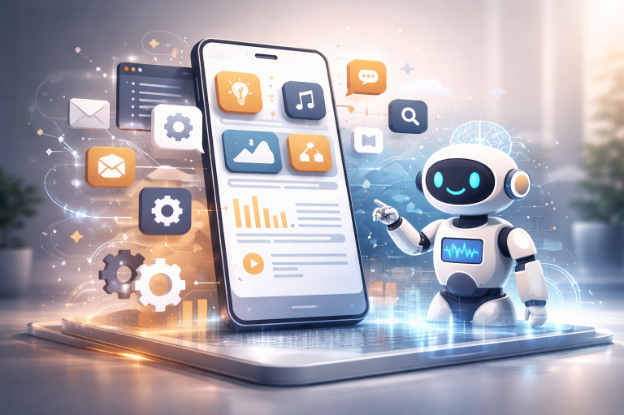
How AI Is Transforming App Development?
AI is transforming app development by embedding intelligence directly into applications, enabling smarter decision-making and more responsive user interactions. Businesses now use AI-integrated apps to increase efficiency, insight, and competitive advantage.
Personalized User Experiences
AI-integrated apps analyze user interactions to deliver tailored content and features, ensuring each user receives a relevant and engaging experience.
- Adaptive interfaces based on user behavior
- Micro-personalization at the screen level
- AI-driven recommendations for content and services
Smart Automation for Operations
AI in app development automates routine processes, reducing manual work for businesses and increasing operational efficiency.
- Predictive maintenance and error detection
- Automated testing and quality assurance
- Intelligent CI/CD workflows for faster updates
Advanced Data Analytics
AI apps provide actionable insights by analysing vast amounts of data in real-time, helping businesses make informed decisions.
- Usage pattern identification for product improvement
- Predictive analytics for user engagement
- Proactive churn reduction strategies
Improve Customer Interaction
Conversational AI in apps enables dynamic communication, automating responses and improving customer satisfaction while reducing operational costs.
- Chatbots with natural language understanding
- Voice-assisted commands
- Real-time query resolution
Security and Privacy Intelligence
AI strengthens app security by detecting anomalies, managing access, and protecting sensitive data automatically.
- Threat detection and fraud prevention
- Personalized security recommendations
- Adaptive privacy measures per user
Businesses using AI in app development gain a competitive edge by creating intelligent, adaptive apps that boost efficiency, deliver data-driven insights, and provide personalized experiences for users worldwide.
Benefits of AI in App Development
Mobile apps powered by AI are transforming the way users interact with technology, making apps smarter, more responsive, and capable of delivering personalized experiences that evolve with user behavior.
Improved Efficiency
AI-integrated apps perform repetitive and large-scale tasks faster than humans. They help businesses manage complex processes easily, which saves time and improves overall productivity.
Personalized Experiences
AI analyzes user behavior and preferences to create app content, recommendations, and features. This personalization increases engagement and keeps users returning to the app.
Process Automation
Artificial intelligence (AI) can automate routine tasks like in-app notifications, content updates, or customer interactions, freeing up developers and employees to focus on strategic priorities.
Mitigating Errors
AI reduces human errors in data handling and app operations. It ensures accurate calculations, consistent outputs, and smooth functionality, enhancing app reliability.
Better Decision-Making
AI-integrated apps can process large datasets to provide actionable insights. These insights help businesses make informed decisions and optimize app performance.
Saves Costs
By automating processes and optimizing operations, AI in apps lowers operational costs. It also ensures that resources are used effectively, reducing wastage and enhancing ROI.
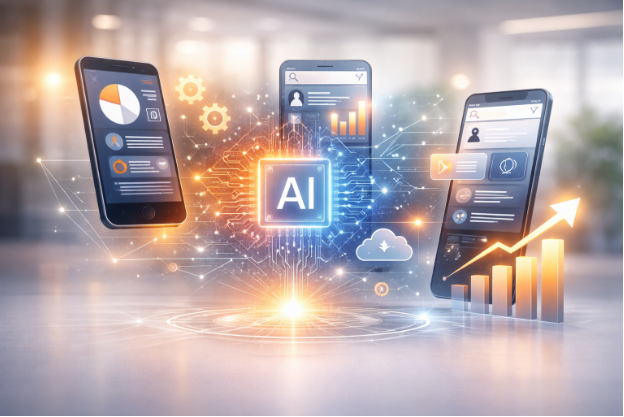
Use Cases of AI in Mobile Apps
AI‑integrated mobile apps are changing how users interact with technology, offering smart features that sense, predict, and act within the app itself, transforming industries worldwide.
Conversational AI & Chatbots
AI‑powered chat interfaces let users interact naturally using text or speech. Customer support, bookings, and FAQs are handled within the app without human involvement.
Image & Voice Recognition
Apps can identify objects, faces, or spoken commands instantly. Photo editing, security logins, and accessibility tools all leverage this AI capability.
Predictive Analytics
Mobile apps analyze patterns to anticipate user actions like next orders, content preferences, or travel planning suggestions.
Smart Recommendations
Streaming, shopping, or news apps use AI to tailor content feeds and product suggestions based on behavior.
Security & Fraud Detection
AI scans behavioral data and usage anomalies to protect sensitive operations, especially in finance and banking apps.
On‑Device Automation
Apps forecast schedules, set reminders, and manage tasks with minimal user input using built‑in AI models.
Industries Using AI in Apps
- Healthcare: symptom analysis, diagnostics, and appointment assistance.
- Retail & e‑commerce: Personalized shopping and virtual try‑on.
- Finance & banking: Fraud alerts and robo‑advisor tools.
- Education: Adaptive tutors and performance tracking.
- Travel & hospitality: Itinerary planning and dynamic pricing.
- Logistics & on‑demand services: Route prediction and delivery ETA.
Conclusion
Integrating AI in app development transforms businesses by automating tasks, enhancing security, and analyzing data. AI delivers personalized experiences, predictive insights, and intelligent support, boosting efficiency, engagement, and growth, giving companies a clear competitive edge in 2026 and beyond.
Frequently Asked Questions
-

Krishna Handge
WOWinfotechJan 07,2026