Inbound vs. Outbound Marketing: Which Marketing Strategy Is Best?
.jpg)
Inbound marketing is best for long-term growth, trust-building, and high-quality leads, while outbound marketing is best for immediate visibility, fast lead generation, and market penetration.
For most businesses in 2026, the highest-performing strategy is a hybrid approach that combines inbound and outbound marketing across the full buyer journey.
This guide explains:
- What inbound and outbound marketing are
- differences between inbound vs. outbound marketing
- Pros, cons, and ROI comparison
- When to use inbound, outbound, or both
- Real-world use cases
- FAQs
What Is Inbound Marketing?
Inbound marketing is a digital marketing strategy focused on attracting potential customers through valuable, relevant content and experiences instead of interrupting them with ads.
Inbound marketing aligns with how modern buyers research products online, independently, and over time.
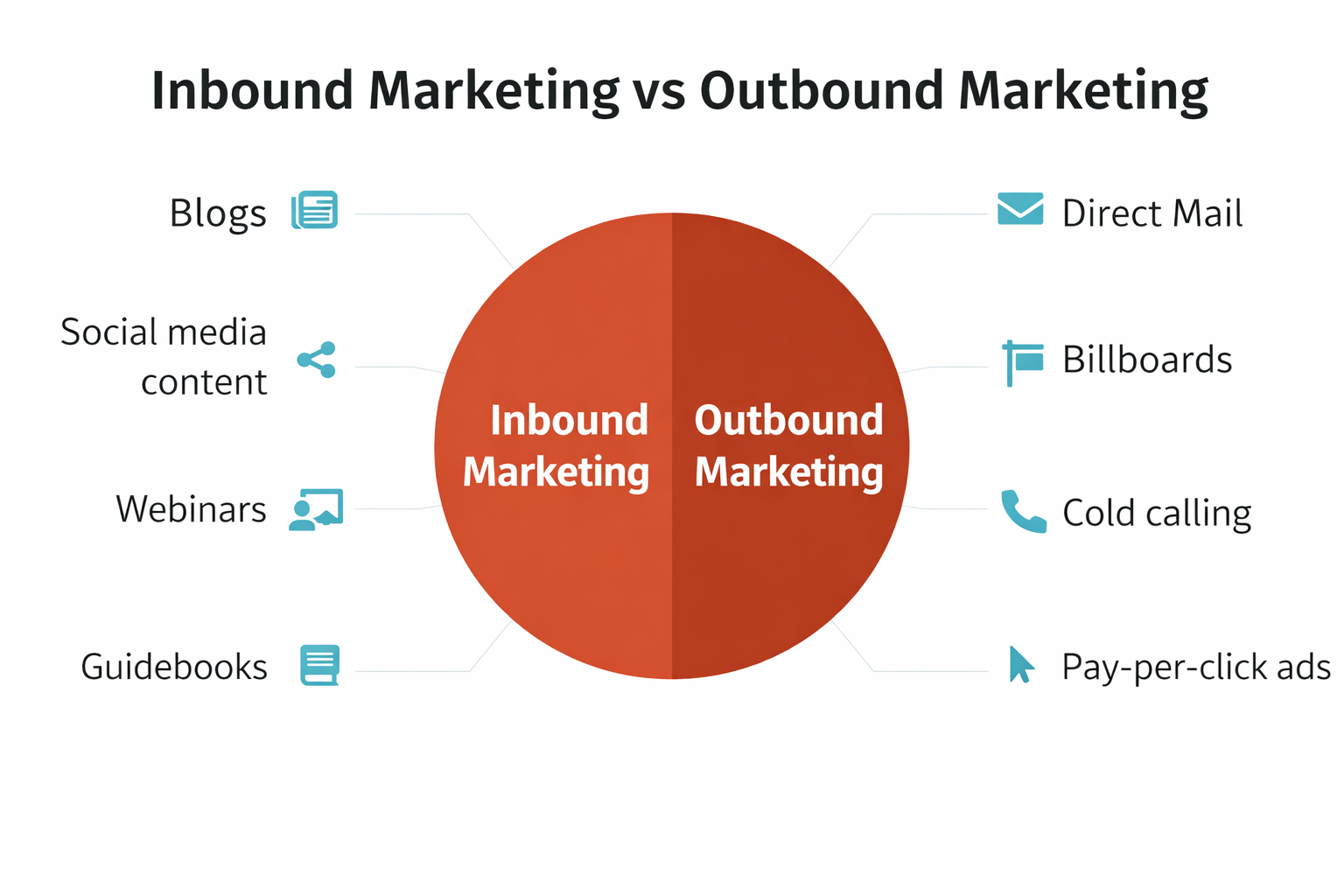
Core Inbound Marketing Channels
- Content marketing (blogs, guides, case studies)
- Search engine optimization (SEO)
- Social media marketing (organic)
- Email marketing & lead nurturing
- Webinars, videos, podcasts
- Marketing automation & CRM integration
Inbound Marketing Goal
To attract, engage, and convert high-intent prospects by educating them at every stage of the buyer’s journey.
What Is Outbound Marketing?
Outbound marketing is a traditional and digital strategy that involves actively pushing messages to a broad audience, regardless of whether they are actively searching for a solution. Outbound marketing prioritizes reach, speed, and exposure.
Core Outbound Marketing Channels
- Paid search ads (Google Ads, Bing Ads)
- Display and social media ads
- Cold email and cold calling
- TV, radio, and print advertising
- Direct mail campaigns
- Trade shows and events
Outbound Marketing Goal
To generate immediate awareness and demand by placing your message directly in front of potential buyers.
Inbound vs. Outbound Marketing: Differences
Here are the differences between Inbound vs. Outbound Marketing
|
Factor |
Inbound Marketing |
Outbound Marketing |
|
Strategy Type |
Pull-based |
Push-based |
|
Buyer Intent |
High |
Low to medium |
|
Time to Results |
Medium to long-term |
Immediate |
|
Cost Over Time |
Lower |
Higher |
|
Lead Quality |
High |
Variable |
|
Trust & Authority |
Strong |
Limited |
|
Scalability |
Compounding |
Budget-dependent |
Pros and Cons of Inbound Marketing
Here are some advantages and disadvantages to consider when comparing inbound and outbound marketing strategies:
Advantages of Inbound Marketing
- Builds long-term brand authority
- Generates higher-quality leads
- Lower cost per lead over time
- Improves SEO visibility and organic traffic
- Aligns with buyer intent and trust signals
Disadvantages of Inbound Marketing
- Slower to show results
- Requires consistent content creation
- Needs SEO and content expertise
- Competitive in saturated niches
Pros and Cons of Outbound Marketing
Here are the main benefits and limitations to consider when evaluating each approach. Understanding both sides helps you choose the right strategy for your goals.
Advantages of Outbound Marketing
- Immediate traffic and visibility
- Predictable short-term results
- Effective for launches and promotions
- Easier to scale quickly with budget
Disadvantages of Outbound Marketing
- Higher cost per lead
- Interruptive by nature
- Lower trust and engagement
- Results stop when ads stop
Inbound vs. Outbound Marketing ROI Comparison
Inbound marketing typically delivers higher ROI over time, while outbound marketing delivers faster but less sustainable returns.
- Inbound ROI improves as content compounds
- Outbound ROI depends on continuous spend
- Inbound supports lifetime value (LTV)
- Outbound supports short-term revenue spikes
When Should You Use Inbound Marketing?
Inbound marketing works best when:
- You want sustainable growth
- Your buyers research before purchasing
- You sell high-consideration products or services
- You want long-term SEO and authority
- You’re building a brand, not just leads
When Should You Use Outbound Marketing?
Outbound marketing works best when:
- You need fast leads or sales
- You’re launching a new product or brand
- You’re entering a new market
- You want predictable traffic volume
- You have the budget for paid acquisition
The Best Strategy in 2026: Hybrid Marketing
In 2026, the most effective marketing strategy is a hybrid inbound outbound model.
How Hybrid Marketing Works
- Outbound ads drive awareness and traffic
- Inbound content educates and nurtures
- SEO captures high-intent searches
- Email nurtures leads into conversions
- CRM and analytics optimize performance
This approach aligns with:
- AI-powered search results
- Multi-touch buyer journeys
- Cross-channel attribution models
Inbound vs. Outbound Marketing Examples
-
Inbound Example
A SaaS company publishes SEO-optimized guides, ranks on Google, captures leads via gated content, and nurtures them through email automation.
-
Outbound Example
A B2B company runs LinkedIn Ads and cold email campaigns to book demos within weeks.
-
Hybrid Example
A fintech brand runs paid ads to landing pages, then nurtures leads with blogs, webinars, and email sequences.
Conclusion: Which Marketing Strategy Is Best?
Inbound marketing is best for sustainable growth, trust, and authority. Outbound marketing is best for speed, reach, and immediate demand. The winning strategy in 2026 is a data-driven hybrid approach that uses both.
By aligning inbound and outbound marketing with buyer intent, AI-driven search behavior, and multi-channel journeys, businesses can maximize visibility, conversions, and ROI.
Frequently Asked Questions
-

Krishna Handge
WOWinfotechFeb 10,2026