
Top 10 Technology Trends in 2027: AI & Future Innovations
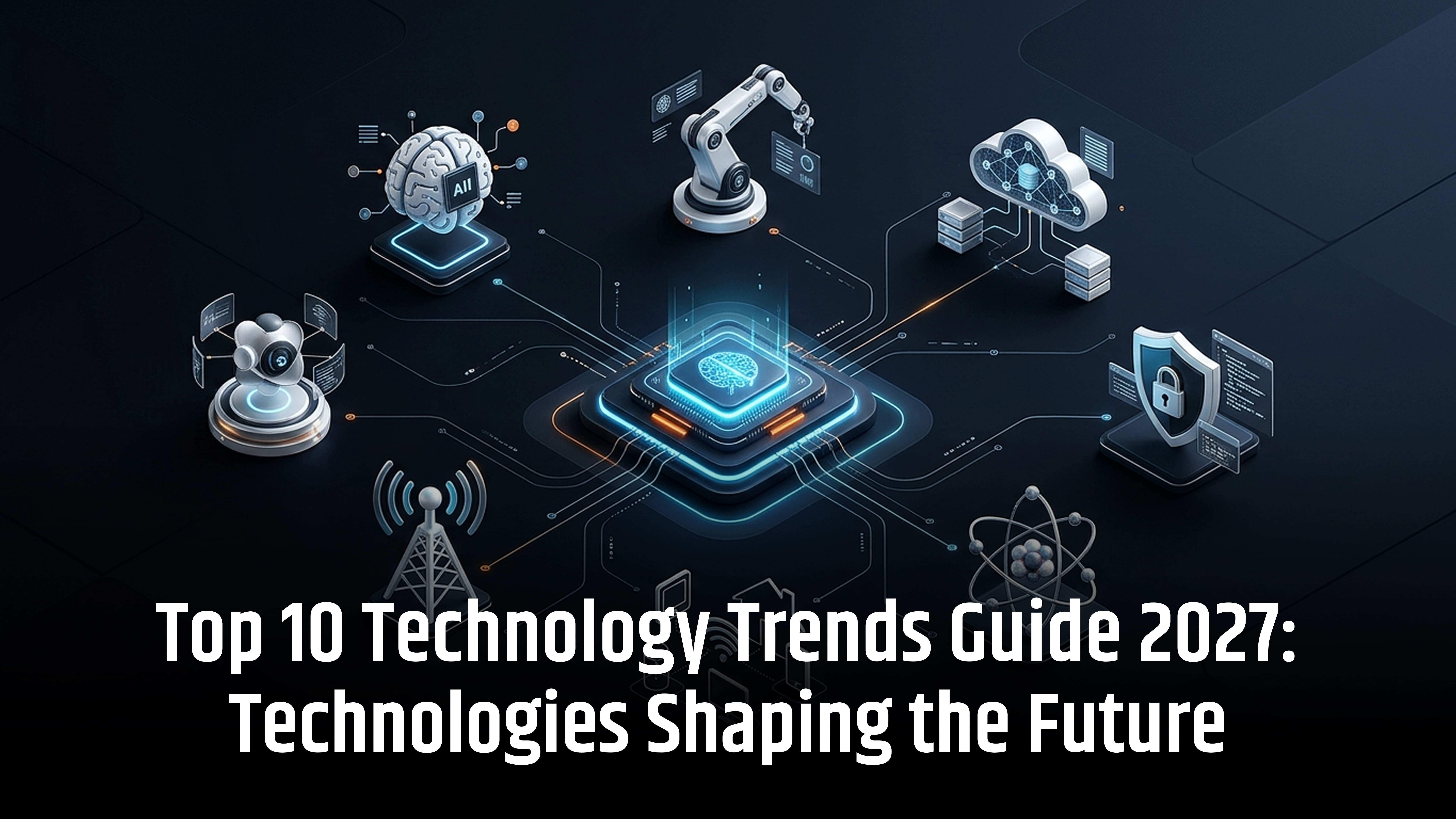
What are the top technology trends shaping 2027? AI-native technology, speech reasoning models, agentic systems, quantum computing and advanced robotics are changing the digital world.
The Top 10 Technology Trends in 2027 highlight key innovations. Businesses are adopting automation, cybersecurity, cloud computing, digital twins and IoT. Speech reasoning models are improving communication. AI-native technology is making applications smarter.
These technologies increase productivity and improve security. They also support better decisions. Understanding these trends helps businesses, students and IT professionals prepare for the future.
Top 10 Technology Trends in 2027
Technology in 2027 is driven by artificial intelligence, automation, cloud computing and advanced digital systems. Here are the ten major technology trends shaping businesses and industries.
1. Agentic AI and Autonomous AI
Agentic AI allows artificial intelligence systems to plan tasks, make decisions and complete actions with limited human involvement.
Unlike traditional chatbots, AI agents can perform multiple steps to achieve a specific goal.
Key applications:
- Customer support automation.
- Software development.
- Business workflow management.
- Data analysis.
- Supply chain operations.
Businesses are adopting agentic AI to improve productivity and reduce repetitive work.
2. Advanced AI Models
Advanced AI models can understand and process text, images, audio, video and numerical information.
Important developments include multimodal AI, reasoning models, large quantitative models and speech reasoning models.
Key applications:
- Financial forecasting.
- Voice assistants.
- Business analytics.
- Scientific research.
- AI-powered decision-making.
These models are making artificial intelligence more useful across different industries.
3. AI-Powered Cybersecurity
AI-powered cybersecurity helps businesses detect threats, prevent attacks and protect sensitive information.
Machine learning and automated monitoring can identify unusual activities and suspicious behaviour.
Key developments:
- AI-based threat detection.
- Automated phishing detection.
- Zero Trust security.
- AI agent identity management.
- Automated vulnerability remediation.
These technologies help organisations strengthen network security and protect digital assets.
4. Quantum Computing
Quantum computing uses quantum physics to process information through quantum bits (qubits).
It has potential applications in complex scientific calculations and specialised computing problems.
Key applications:
- Drug discovery.
- Chemical simulations.
- Materials research.
- Complex optimisation.
- Post-quantum cryptography research.
Quantum computing is still developing and will complement, rather than replace, traditional computers.
5. AI-Powered Robotics and Physical AI
AI-powered robotics combines artificial intelligence, sensors and computer vision to create intelligent machines.
These robots can understand their surroundings and respond to changing conditions.
Key applications:
- Industrial automation.
- Warehouse management.
- Healthcare assistance.
- Agricultural operations.
- Manufacturing and assembly.
Physical AI is helping businesses improve productivity, accuracy and workplace safety.
6. Cloud Computing and Edge AI
Cloud computing provides online access to storage, databases, software and computing resources.
Edge AI processes information closer to where it is generated, allowing faster local decisions.
Key developments:
- Hybrid cloud computing.
- Multi-cloud infrastructure.
- Edge AI applications.
- Cloud-based AI services.
- Real-time data processing.
These technologies support modern business applications, connected devices and AI workloads.
7. Digital Twins and World Models
Digital twin technology creates virtual representations of physical objects, machines and processes.
It uses sensor data and simulation tools to monitor performance and predict potential problems.
Key applications:
- Smart manufacturing.
- Predictive maintenance.
- Smart city planning.
- Building management.
- Industrial simulations.
World models go further by helping AI systems understand environments and predict possible changes.
8. AI-Native Technology
AI-native technology refers to software, platforms and systems designed with AI at their core. It helps businesses automate workflows, analyse data and build intelligent digital services.
Key applications:
- AI-native applications
- Intelligent workflow automation
- AI-powered business platforms
- Real-time data analysis
9. Digital Sovereignty and AI Governance
Digital sovereignty means maintaining control over digital infrastructure, data and technology systems.
AI governance focuses on managing artificial intelligence responsibly and securely.
Key priorities:
- Data privacy and protection.
- Regulatory compliance.
- AI security and monitoring.
- Access control.
- Responsible AI usage.
- Digital infrastructure independence.
These practices help businesses manage technology risks and protect sensitive information.
10. Speech Reasoning Models
Speech reasoning models combine voice recognition, language understanding and AI reasoning. They help AI systems understand spoken instructions, answer questions and support natural voice conversations.
Key applications:
- Real-time voice assistants
- AI-powered customer support
- Voice-based business automation
- Multilingual communication
Enterprise and IT Trends in 2027
Enterprise and IT trends in 2027 highlight how businesses use AI, cloud computing, automation and cybersecurity to improve efficiency, strengthen digital infrastructure and drive innovation.
- Agentic AI in Business Operations: AI agents will automate multi-step business workflows, manage tasks and work across enterprise software with human supervision.
- AI-Driven Cybersecurity: AI will help detect cyber threats, identify zero-day vulnerabilities and strengthen network security. However, attackers may also use AI to automate cyberattacks.
- Agentic FinOps: AI-powered financial operations tools will help businesses monitor cloud spending, control LLM token costs and optimise AI infrastructure budgets.
- Physical AI and Humanoid Robots: AI-powered robotics and humanoid robots will support manufacturing, warehouse operations and other industrial tasks.
How Will Technology Trends Affect Different Industries in 2027?
Technology trends will affect each industry in different ways. Their impact depends on business needs, daily operations and industry regulations.
|
Industry |
Key Technology Applications in 2027 |
Main Benefits |
Key Challenges |
|
AI-powered fraud detection, risk analysis, customer support and workflow automation |
Faster financial services, better risk management and improved fraud prevention |
Cybersecurity, AI transparency and regulatory compliance |
|
|
Manufacturing |
Industrial IoT, digital twins, AI-powered robotics and predictive maintenance |
Improved production, equipment monitoring and operational efficiency |
High implementation costs, system integration and workforce training |
|
AI learning assistants, adaptive learning platforms, virtual classrooms and AR-based learning |
Personalized learning, improved student engagement and accessible education |
Data privacy, academic integrity and AI accuracy |
|
|
AI product recommendations, inventory planning, customer support and demand forecasting |
Better customer experiences, smarter inventory management and efficient supply chains |
Customer data protection, integration costs and changing consumer expectations |
|
|
IoT sensors, satellite data, AI analytics and agricultural robotics |
Better crop monitoring, efficient irrigation and precision farming |
Technology costs, connectivity and access to reliable data |
Which Technology Trends Should Students and Professionals Learn in 2027?
Technology trends also influence career development and professional skills. Students and working professionals can use these developments to identify relevant learning areas.
|
Technology area |
Useful skills to learn |
|
Artificial Intelligence |
Machine learning, prompt engineering, AI evaluation |
|
AI agents, APIs, workflow automation |
|
|
Cybersecurity |
Network security, cloud security, identity management |
|
Cloud Computing |
AWS, Microsoft Azure, Google Cloud |
|
Data Science |
Python, SQL, statistics, data visualisation |
|
Robotics |
Robotics programming, computer vision, automation |
|
IoT |
Embedded systems, sensors, networking |
|
Quantum Computing |
Linear algebra, quantum algorithms, physics |
|
Software Development |
Programming, testing, secure coding |
|
Sustainable IT |
Energy efficiency, infrastructure optimisation |
The right learning path depends on an individual's interests and existing knowledge.
For example, someone interested in software development may focus on AI-assisted programming, cloud computing and cybersecurity. Someone interested in hardware may explore robotics, embedded systems and IoT.
The most useful approach is to develop strong technical fundamentals and then specialise in an area with relevant real-world applications.
Challenges and Risks of Emerging Technologies in 2027
Although new technologies offer opportunities, they also introduce challenges.
- Data Privacy: Protect sensitive data and follow privacy laws.
- Cybersecurity: Prevent cyberattacks on AI systems and connected devices.
- High Costs: Manage AI, cloud computing and automation expenses.
- Skill Gaps: Train employees in emerging technologies.
- AI Accuracy: Verify AI outputs with human oversight.
- Vendor Dependency: Ensure data portability and system flexibility.
- Energy Consumption: Reduce data centre energy use.
Conclusion
The top technology trends of 2027 are shaping the future of business and digital transformation. From agentic AI and quantum computing to cybersecurity, cloud computing, IoT and robotics, these innovations are changing how organisations work.
Adopting the right emerging technologies can improve productivity, strengthen security and support business growth. However, companies must also focus on data privacy, responsible AI and skilled teams.
Want to prepare your business for the future? Connect with WOWinfotech to explore smart technology solutions and accelerate your digital transformation journey.
FAQs About Technology Trends in 2027
-

Krishna Handge
WOWinfotechNov 05,2026