.jpg)
PPC advertising is one of the quickest ways for businesses to get instant online visibility, but many business owners often wonder if it’s the right choice for them. The answer isn’t the same for everyone, because results depend on your industry, target audience, budget, and campaign strategy.
Businesses don’t want to wait months for organic traffic to grow. They need fast, targeted, and measurable results that help them reach potential customers at the right time.
In this blog, we’ll explain What is ppc in Digital Marketing, how it works, the benefits it offers, and how businesses can use it effectively to drive traffic, generate leads, and get better returns on their marketing spend.
What is PPC in Digital Marketing
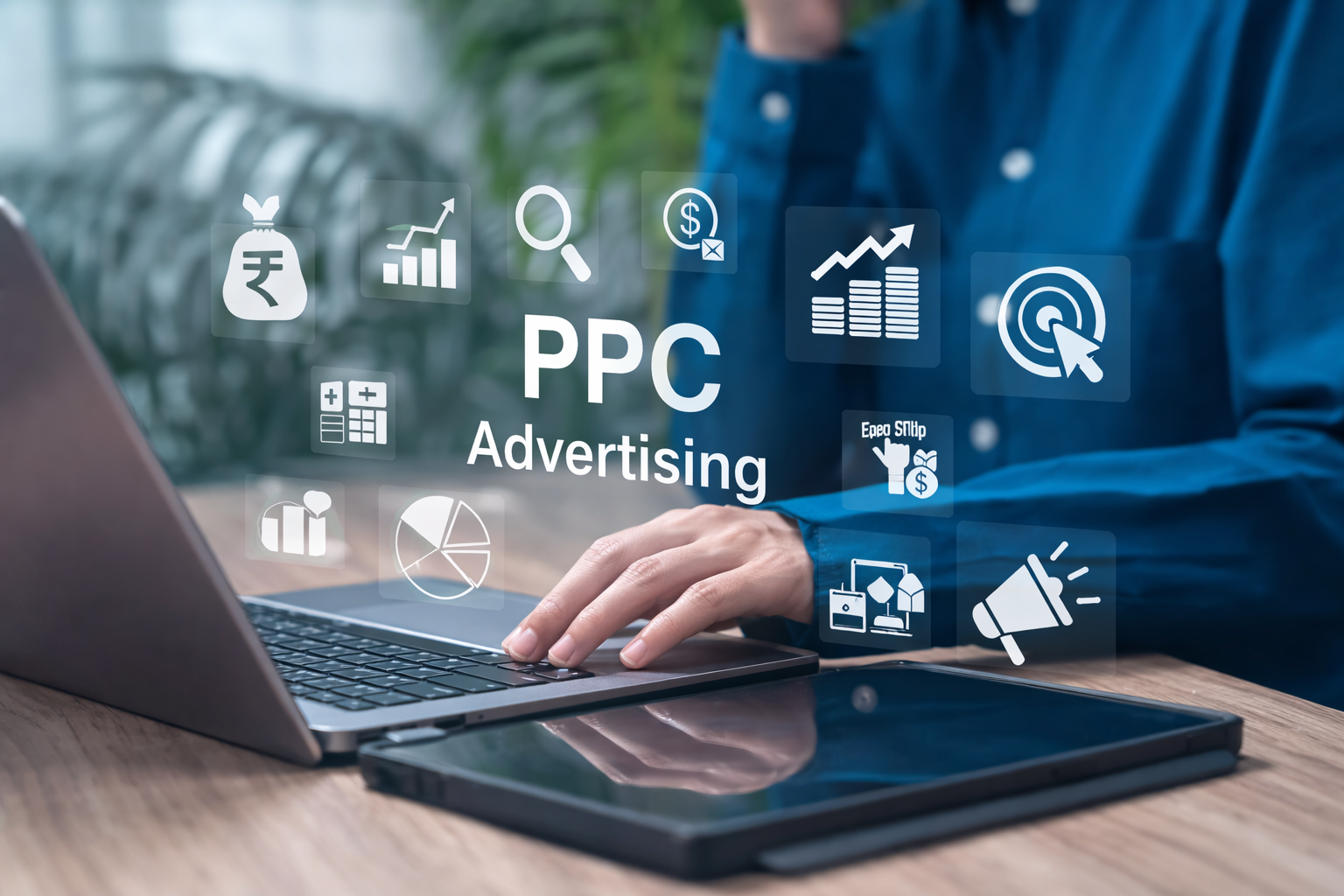
Pay-Per-Click is a form of online marketing in which you need to pay for each click on the online advertisement. This seemingly costs money in place of the revenue made through SEO for visiting the website. This is similar to real estate on the internet. You are paying to advertise on the best land on the internet.
One of the most identifiable kinds of PPC is Search Engine Advertising. When you Google something and see ads at the top of the results page, those are PPC ads. Companies pay for keywords that people might be interested in their offerings, so these ads appear in results for people who Google those keywords.
How Does the PPC Auction Work?
Understanding how Google's PPC auction process works is essential for attaining success. Here’s how it works: You pick keywords to target with ads you’ve created, then enter a price - how much you'll spend per ad click. When a search is conducted for your keyword phrase, there’s a split-second auction held to see which ads will be placed where.
However, here's the twist: the highest bidder doesn’t always win the search result. Search engines such as Google feature a Quality Score algorithm that takes the relevance of your message in the ad, the landing page experience, and the Click-Through Ratio. You can win over the highest bidder if your message and landing page offer the most relevance, and you can offer users the highest quality despite having the highest cost-per-click bid.
Why PPC Delivers Results
- Speed is Everything: While SEO can take six months or more to show significant results, PPC campaigns drive qualified traffic within hours of the launch. Therefore, it is invaluable for new businesses, product launches, or time-sensitive promotions.
- Laser-Focused Targeting: The targeting offered through PPC platforms is unprecedented. You can reach people based on location, device, time of day, demographics, and even interests and past online behavior. Retargeting can be set up to get visitors who browsed your site but didn't buy back to you when they're ready to convert.
- Budget Flexibility: Whether you have $500 or $50,000 to spend, PPC accommodates your budget. Set daily limits, immediately pause campaigns, scale up, or down based on performance. The control provided by PPC delivers accessibility to businesses of all sizes.
- Measurable and Trackable: Everything about PPC is measurable. You'll know exactly how many people saw your ad, how many clicked, what they did on your site, and which campaigns generated actual revenue. The data-driven nature removes all guesswork and allows continuous optimization.
Major PPC Platforms to Consider
- Google Ads dominates the landscape, reaching billions of daily searches across Google Search, YouTube, Gmail, and millions of partner websites. It's the starting point for most PPC campaigns.
- Microsoft Advertising (formerly Bing Ads) shouldn't be overlooked. While smaller than Google, it often has lower competition and costs, and reaches a distinct demographic, skewing slightly older and more affluent.
- Social media platforms offer unique advantages. Facebook and Instagram excel at interest-based targeting and visual storytelling. LinkedIn is unmatched for B2B marketing and reaching professionals by job title, industry, and company size. TikTok and Pinterest cater to specific demographics and content styles.
- Amazon Advertising has become essential for e-commerce sellers, placing products directly in front of shoppers with high purchase intent.
Understanding PPC Costs
Here, we explain PPC costs in detail and the factors that influence pricing.
|
Aspect |
Details |
|
Common Question |
One of the most frequently asked questions about PPC is: How much does PPC cost? There is no single fixed answer, as costs vary by industry and competition. |
|
High-Competition Industries |
Industries like legal services, insurance, and finance are highly competitive, with cost-per-click (CPC) often exceeding ₹4,000 per click. |
|
Low-Competition Industries |
In less competitive niches, businesses may pay ₹80 or less per click, making PPC more affordable. |
|
Average CPC (All Industries) |
Across most industries, the average CPC on Google Ads typically ranges between ₹160–₹240. |
|
Why CPC Isn’t Everything |
Focusing only on CPC can be misleading. The real measure of success is your return on investment (ROI). |
|
ROI Example |
Paying ₹4,000 per click is worthwhile if each conversion generates ₹40,000 in value for your business. |
|
Smart Budget Planning |
To set the right PPC budget, calculate your customer lifetime value, understand conversion rates, and determine what you can afford to pay per click while remaining profitable. |
Essential Metrics for PPC Success
To get the most out of PPC campaigns, you need to pay attention to the right metrics. Click-through rate will help you understand the effectiveness of your commercials. Conversion rate will help you understand the effectiveness of your landing pages.
Cost per acquisition will help you understand the exact amount you are paying per acquisition. Quality score will help you understand Google’s assessment of the relevance of your ad. Return on ad spend is the best measure - the amount you make per dollar you spend to advertise.
Getting Your PPC Strategy Right
The key to succeeding with PPC is having good keyword research. With tools such as the Google Keyword Planner, it is easy to determine what search terms your actual customers are using. Another crucial aspect of PPC marketing, however, is the use of negative keywords. These are terms that you do not want your ad triggered by.
The text in your advert must address user intent. What are the users trying to solve? Why should they pick you? You must have a call-to-action in the text that tells the users what you require them to do.
Optimization on the landing page is very important and is also the most undervalued. This landing page should resemble the advertisement offer. Moreover, the landing should load quickly. It should also work perfectly on the mobile phone. A bad landing will spoil the entire ad campaign.
Conclusion: What is ppc in digital marketing
PPC advertising offers unmatched advantages for businesses seeking immediate, measurable results. While it requires ongoing attention and optimization, the ability to place your products or services directly in front of people actively searching for solutions is exceptionally great. Whether you're a startup looking for your first customers or an established business scaling growth, PPC deserves a place in your digital marketing suite.
Start with clear goals, a modest budget, and a commitment to testing and learning. The data will guide you toward campaigns that deliver real business results.
Frequently Asked Questions
-

Krishna Handge
WOWinfotech
Jan 14,2026