Difference Between Google Search Ads and Display Ads
_(1).jpg)
If you run ads on Google Ads, you have probably seen two main types of ads: Search Ads and Display Ads. Both are part of the same advertising platform, but they are used for different goals in digital marketing.
Understanding the difference between Google Search Ads and Display Ads helps you improve your campaign results, reach the right audience, and create a more effective advertising strategy.
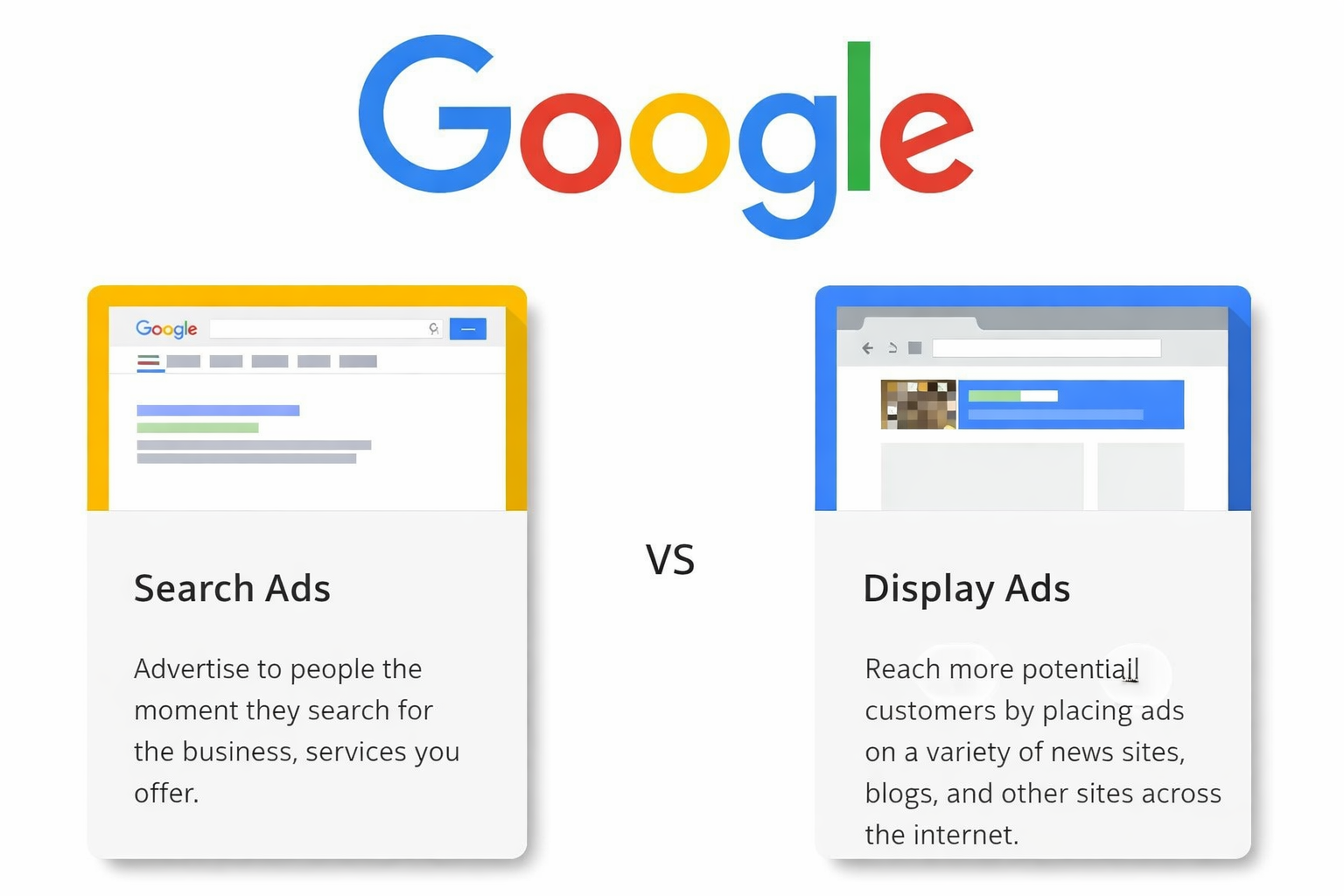
Search Ads vs Display Ads
Here is an exploration of the difference between Search Ads and Display Ads and how each one is used in online advertising.
|
Feature |
Google Search Ads |
Google Display Ads |
|
Platform |
Google Ads Search Network |
Google Display Network |
|
Intent |
High user intent |
Low/passive intent |
|
Format |
Mostly text ads |
Image, banner, video |
|
Targeting |
Keywords |
Audience, interests, demographics |
|
Placement |
Search engine results pages |
Websites, apps, YouTube |
|
Cost |
Higher CPC |
Lower CPC |
|
Best For |
Conversions and leads |
Brand awareness and remarketing |
takeaway:
- Search Ads capture existing demand from users actively searching for solutions.
- Display Ads create demand by introducing your brand to new audiences.
Search ads generally deliver higher conversion rates (~4.2%), while display ads average around 0.55% conversion rate because they target users earlier in the buying journey.
What Are Google Search Ads?
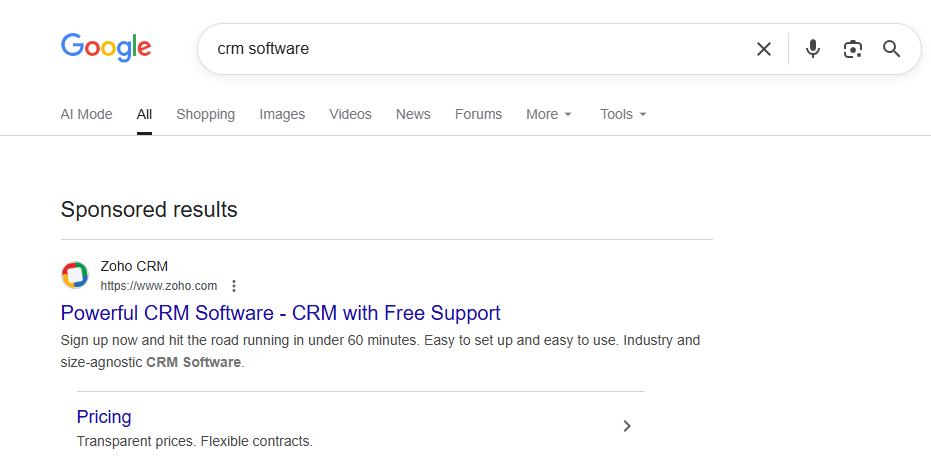
Google Search Ads are text-based advertisements that appear at the top or bottom of search engine results pages (SERPs) when users search for specific keywords.
They run on the Search Network, which includes Google search results and partner sites.
Example search query: “best CRM software”
You will typically see sponsored results labeled “Ad” or “Sponsored” above organic results.
Characteristics of Search Ads
- Triggered by keywords
- Appears on SERP pages
- Usually text-based
- Uses Pay-Per-Click (PPC) bidding
- Targets high-intent users
Example
Why Search Ads Work
Search ads capture existing demand because users are actively searching for solutions.
This is known as intent-driven marketing.
What Are Google Display Ads?
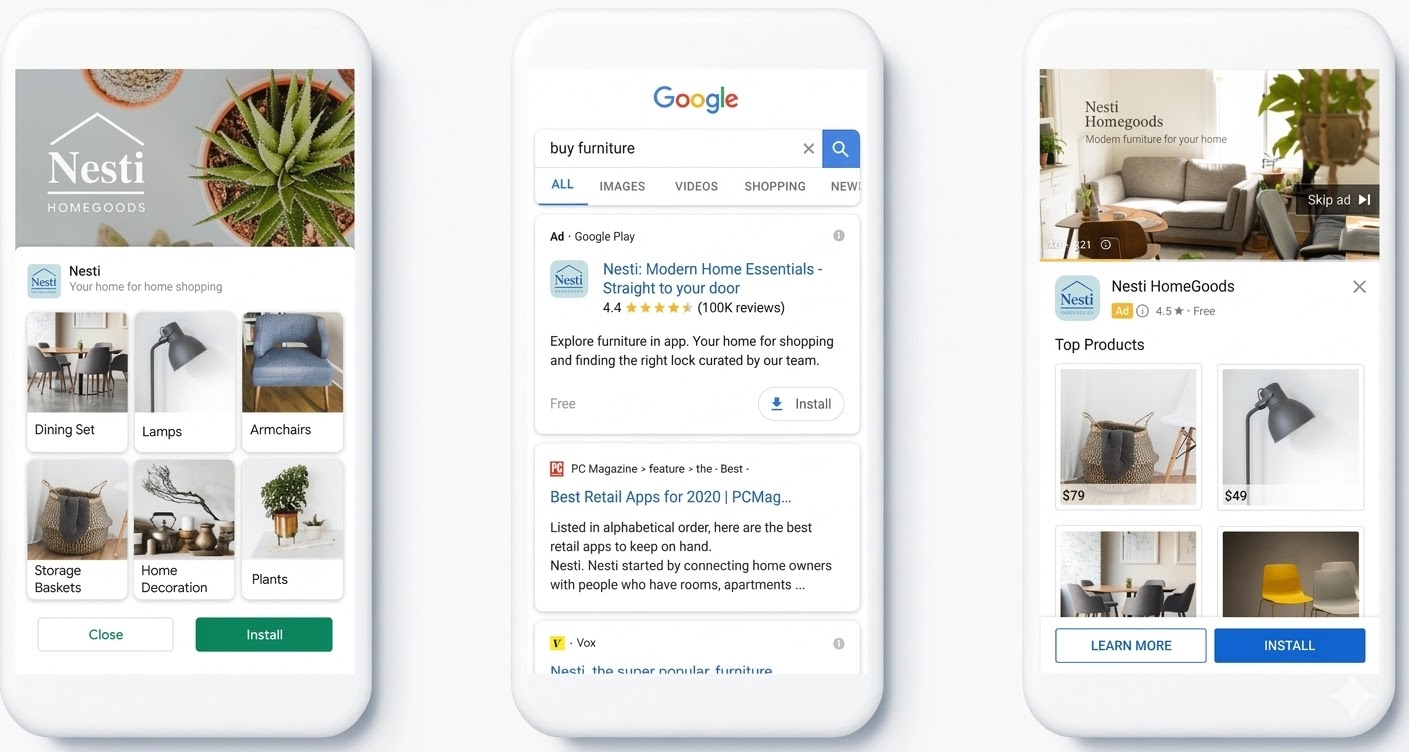
Google Display Ads are visual ads that appear on websites, mobile apps, YouTube, and Gmail through the Google Display Network (GDN).
The Google Display Network includes over 2 million websites and reaches more than 90% of internet users worldwide.
Unlike search ads, display ads are shown based on audience targeting rather than search queries.
Characteristics of Display Ads
- Visual formats (images, banners, videos)
- Displayed across websites and apps
- Audience-based targeting
- Often used for remarketing
Example
You visit an e-commerce site and later see ads for the same product on a news website. That’s display advertising in action.
Search Ads vs Display Ads: Core Differences
1. User Intent
The biggest difference is user intent.
Search Ads → Pull marketing
Display Ads → Push marketing
Search ads appear when users actively search for solutions, while display ads appear when users are browsing unrelated content.
|
Type |
Intent |
|
Search Ads |
High intent |
|
Display Ads |
Low or passive intent |
2. Ad Format
Search ads are usually text-based, while display ads use visual creatives.
|
Format |
Search Ads |
Display Ads |
|
Text |
✔ |
✔ |
|
Image |
✖ |
✔ |
|
Video |
✖ |
✔ |
|
Interactive |
✖ |
✔ |
Display ads often include:
- Banner ads
- Animated graphics
- Rich media
- Video ads
3. Targeting Method
Search ads target keywords, while display ads target audiences.
|
Targeting |
Search Ads |
Display Ads |
|
Keywords |
✔ |
Optional |
|
Demographics |
✔ |
✔ |
|
Interests |
Limited |
✔ |
|
Behavior |
Limited |
✔ |
|
Remarketing |
✔ |
✔ |
Display advertising excels in behavioral targeting and retargeting campaigns.
4. Placement and Reach
Search ads appear only on search results pages, while display ads appear across the web.
|
Placement |
Search Ads |
Display Ads |
|
Search engines |
✔ |
✖ |
|
Websites |
✖ |
✔ |
|
Apps |
✖ |
✔ |
|
YouTube |
✖ |
✔ |
Display ads therefore have much broader reach, while search ads are more targeted.
5. Cost and Performance
Search ads typically have:
- Higher CPC
- Higher conversion rates
Display ads typically have:
- Lower CPC
- Lower conversion rates
Average benchmarks:
|
Metric |
Search Ads |
Display Ads |
|
Conversion rate |
~4.2% |
~0.55% |
|
CPC |
~$2.41 |
~$0.59 |
Marketing Funnel: Where Each Ad Type Works Best
A strong PPC strategy uses both ad types across the marketing funnel.
Top of Funnel (Awareness) – Best: Display Ads
- Brand awareness -Display ads introduce your brand to new audiences.
- Product discovery -Helps users learn about your products or services.
- Audience building -Builds a pool of potential customers for future campaigns.
Middle of Funnel (Consideration) – Best: Display Ads + Retargeting
- Remarketing campaigns -Reconnect with users who previously visited your site.
- Content promotion -Shares helpful content to engage potential customers.
- Lead nurturing -Guides interested users toward making a decision.
Bottom of Funnel (Conversion) – Best: Search Ads
- Purchase intent -Targets users ready to buy with keyword-based ads.
- Lead generation -Drives signups, inquiries, or contact form submissions.
- Booking or signups -Encourages immediate action from interested users.
Advantages and Disadvantages
Here we explain the key advantages and disadvantages.
Advantages of Search Ads
- High conversion rates
- Strong keyword targeting
- Captures purchase intent
- Immediate traffic
Disadvantages of Search Ads
- Higher CPC
- Limited reach
- Highly competitive keywords
Advantages of Display Ads
- Massive reach
- Strong visual branding
- Lower cost per click
- Effective for remarketing
Disadvantages of Display Ads
- Lower conversion rates
- Ad blindness
- Requires strong creatives
When to Use Google Search Ads
Search ads are ideal when:
- You want immediate conversions
- You target high-intent keywords
- You sell problem-solving products
- Your marketing goal is lead generation
Example industries:
- SaaS
- Local services
- eCommerce
- Legal services
When to Use Google Display Ads
Display ads are ideal when:
- You want brand awareness
- You launch a new product
- You run retargeting campaigns
- You have a long sales cycle
Example industries:
- eCommerce
- Education
- Automotive
- Travel
Best Strategy: Combine Search and Display Ads
The most successful PPC campaigns use both ad types.
A typical strategy:
- Use Display Ads to generate awareness
- Retarget visitors with Display remarketing
- Convert them using Search Ads
This creates a full-funnel paid media strategy.
Best Practices for Search and Display Campaigns
Search Ads Best Practices
- Use high-intent keywords
- Optimize Quality Score
- Create compelling ad extensions
- Align ads with landing pages
Display Ads Best Practices
- Use strong visual creatives
- Test multiple banner formats
- Use remarketing lists
- Refresh creatives regularly
Entities Related to Search and Display Advertising
Technologies and platforms:
- Google Ads
- Google Display Network
- Google Analytics
- Google Tag Manager
Digital marketing concepts:
- Pay-Per-Click (PPC)
- Remarketing
- Conversion Rate Optimization
- Audience Targeting
- Search Engine Marketing (SEM)
Conclusion
Understanding the difference between Google Search Ads and Display Ads is essential for building an effective PPC strategy.
Search ads capture existing demand, while display ads build brand awareness and nurture audiences.
The most successful marketers don't choose one over the other they combine both to guide customers through the entire marketing funnel.
Frequently Asked Questions
- eCommerce
- Education
- Real estate
- Travel
These industries benefit from visual storytelling and remarketing.
-

Krishna Handge
WOWinfotechMar 17,2026