Best Nursery Management Software in 2026
_(1).jpg)
Managing a plant nursery involves many daily tasks such as plant inventory tracking, customer order management, plantation scheduling, sales reporting, supplier coordination, and financial monitoring. Many nursery businesses still use manual methods like Excel sheets, paper records, and phone communication, which often lead to inventory errors, delayed orders, missed nursery tasks, and poor operational visibility.
To solve these challenges, businesses are adopting Nursery Management Software, a centralized digital solution designed to automate nursery operations, improve inventory accuracy, manage customer orders, track expenses, and streamline daily workflows.
This case study explains how a Nursery Management System helped plant nurseries and greenhouse businesses improve operational efficiency, reduce manual work, and support business growth in 2026.
About the Client Requirement
The nursery business was facing operational challenges due to manual management processes.
The business managed:
- Plant inventory
- Customer orders
- Supplier records
- Plantation schedules
- Daily sales
- Staff activities
However, most operations were handled manually through:
- Excel sheets
- Registers
- Phone calls
- WhatsApp communication
- Paper invoices
As the business expanded, managing daily operations became more complicated.
Problems Faced by the Nursery Business
Here’s an Overview of the Major Operational Challenges Faced by the Nursery Business Before Implementing the Management Software.
1. Plant Inventory Errors
The nursery managed a large number of plant categories and inventory records manually, which made inventory tracking difficult and time-consuming. Without a centralized plant inventory management system, maintaining accurate stock visibility became a major operational challenge.
Issues:
- Wrong plant stock counts
- Duplicate inventory records
- Missing plant entries
- Difficulty tracking plant growth stages
2. Delayed Customer Orders
The nursery received customer orders from multiple channels, including phone calls, WhatsApp, walk-in customers, and social media inquiries. Without a centralized order management system, handling customer requests efficiently became difficult.
Issues:
- Delayed order processing
- Unclear plant availability
- Billing and invoice errors
- Difficulty tracking deliveries
3. Missed Nursery Activities
Daily nursery operations involved several recurring plantation and maintenance activities such as seed sowing, watering schedules, and rootstock care. Managing these tasks manually often affected operational consistency and plant maintenance.
Issues:
- Missed sowing schedules
- Delayed watering activities
- Poor plantation monitoring
- Inconsistent plant maintenance
4. Financial Tracking Issues
The business struggled to manage expenses, vendor payments, sales reports, and purchase records using manual methods. Without centralized financial reporting, tracking operational performance became difficult.
Issues:
- Difficulty tracking daily expenses
- Delayed vendor payment records
- Manual profit calculation
- Unorganized sales reporting
5. Unorganized Customer Data
Customer records were stored across notebooks, spreadsheets, and mobile communication channels. This made customer relationship management difficult and reduced communication visibility.
Issues:
- No centralized customer database
- Difficulty tracking repeat customers
- Poor follow-up management
- Missing customer purchase history
Why Manual Nursery Management Was Not Sustainable
As the nursery business expanded, manual operations created higher operational costs and management delays.
The business needed:
- Real-time inventory visibility
- Automated order management
- Plantation scheduling
- Centralized reporting
- Better operational control
The goal was not just software implementation. The goal was operational improvement and business scalability.
The Solution: Nursery Management Software
To solve these challenges, WOWinfotech developed a centralized Nursery Management System.
The software is automated:
- Plant inventory tracking
- Customer order management
- Task scheduling
- Expense reporting
- Vendor coordination
- Sales reporting
The system was designed for both web and mobile platforms to support operational flexibility.
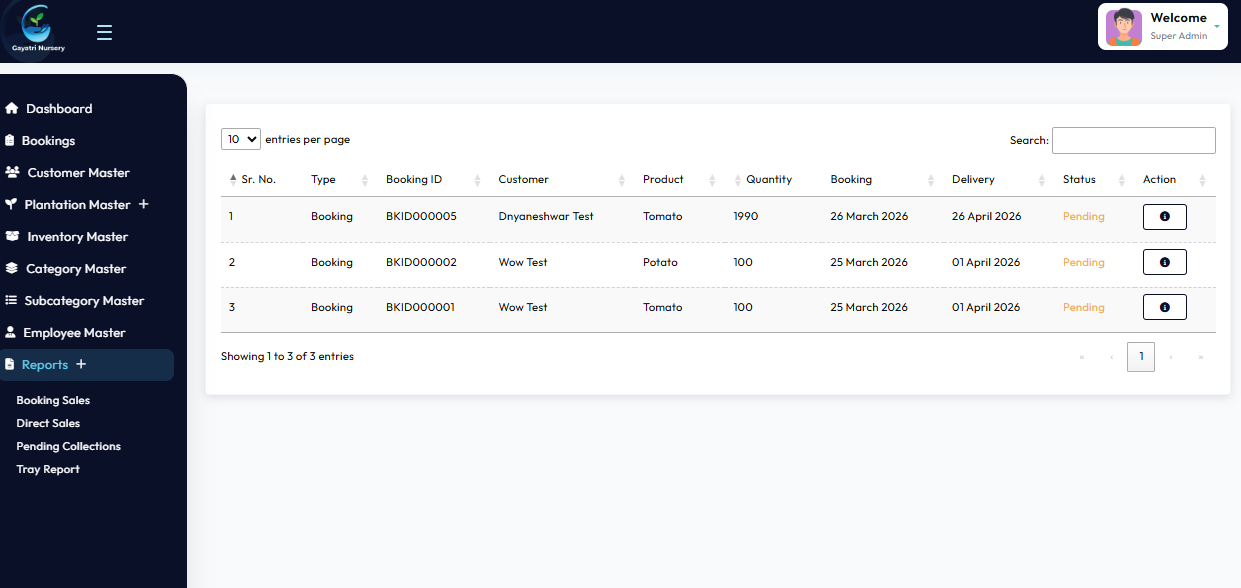
Features of the Nursery Management Software
Here are the main features of the Nursery Management Software that help plant nurseries manage inventory, customer orders, scheduling, financial tracking, and daily operations more efficiently.
1. Plant Inventory Management
The inventory management module helps track:
- Plant categories
- Plant stock quantity
- Plant growth stages
- Available inventory
- Low stock alerts
Operational Impact
Before implementation, staff manually checked stock availability.
After implementation:
- Inventory tracking became centralized
- Stock visibility improved
- Inventory errors have reduced significantly
2. Order and Sales Tracking System
The software manages:
- Customer orders
- Invoice generation
- Payment records
- Delivery tracking
- Sales reports
Operational Impact
The business reduced order confusion and improved customer communication.
Order processing became faster because all customer data was available in one dashboard.
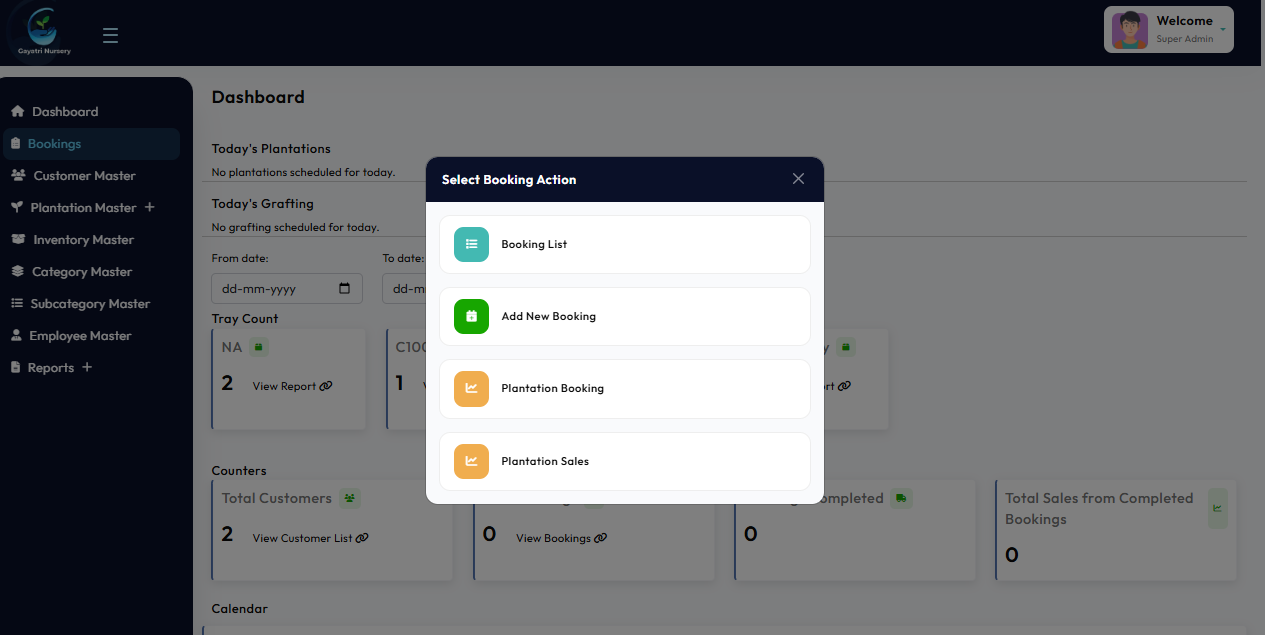
3. Customer Database Management
The customer module stores:
- Contact information
- Purchase history
- Order details
- Customer preferences
Operational Impact
The nursery business could now:
- Track repeat customers
- Improve follow-up communication
- Manage customer history efficiently
4. Nursery Task Scheduling
The software schedules:
- Rootstock maintenance
- Sowing timetables
- Watering reminders
- Plantation activities
- Staff assignments
Operational Impact
The nursery reduced missed activities and improved daily operational planning.
Staff coordination also became easier.
5. Expense and Profit Tracking
The financial module records:
- Daily expenses
- Vendor payments
- Sales revenue
- Purchase records
- Profit reports
Operational Impact
Business owners gained better visibility into:
- Operational costs
- Monthly profits
- Purchase expenses
- Financial performance
6. Supplier and Vendor Management
The software maintains:
- Vendor records
- Purchase history
- Supplier communication
- Procurement tracking
Operational Impact
Vendor coordination became more organized and procurement delays were reduced.
Nursery Management Software: Before vs. After Implementation
Here is a comparison showing how nursery operations improved after implementing the Nursery Management Software.
|
Operational Area |
Before Software |
After Software |
|
Inventory Tracking |
Manual registers |
Centralized inventory dashboard |
|
Order Management |
WhatsApp and paper notes |
Real-time order tracking |
|
Plantation Scheduling |
Manual reminders |
Automated task scheduling |
|
Customer Records |
Scattered data |
Centralized customer database |
|
Expense Reporting |
Manual calculations |
Automated financial reports |
|
Vendor Management |
Offline records |
Organized supplier tracking |
Technology Stack Used for Nursery Management Software
The Nursery Management Software was built using modern web technologies to ensure scalability, fast performance, secure data management, and smooth user experience across web and mobile platforms.
|
Technology Category |
Technologies Used |
Purpose |
|
Frontend Development |
ReactJS, Angular |
Responsive user interface and fast web application performance |
|
Backend Development |
PHP, Laravel |
Business logic handling, API development, and system operations |
|
Database Management |
MySQL |
Secure storage and management of nursery data and transactions |
|
CMS Integration |
WordPress |
Website content management and web integration |
|
Mobile & Web Support |
Responsive Web Architecture |
Supports mobile access and cross-device compatibility |
|
Security & Performance |
Secure Database Structure |
Secure data handling and optimized system performance |
|
Multi-User Operations |
Role-Based Access System |
Supports admin, staff, and operational user management |
Industries Using Nursery Management Software
Here are the major industries using Nursery Management Software to manage plant inventory, automate operations, and improve daily business workflows.
-
Plant Nurseries and Garden Centers
Manage inventory, plant sales, and customer orders.
-
Landscaping and Horticulture Firms
Track plantation activities and supplier management.
-
Greenhouse Businesses
Monitor plant schedules and greenhouse operations.
-
Urban Farming Units
Manage crop inventory and operational planning.
-
Botanical Gardens
Track plant collections and maintenance activities.
Why is Nursery Management Software Important in 2026
In 2026, plant nurseries and greenhouse businesses are managing larger inventories, online customer orders, plantation schedules, and daily operational activities. Manual management methods are no longer efficient for handling modern nursery operations and business growth.
Reasons:
- Improves plant inventory tracking and stock visibility
- Automates customer orders, billing, and sales reporting
- Helps manage plantation schedules and nursery activities
- Reduces manual work and improves operational efficiency
Latest Trends in Nursery Software in 2026
Here are the latest trends in Nursery Software in 2026 that are helping plant nurseries improve inventory management, automate daily operations, and manage business activities more efficiently.
1. Cloud-Based Nursery Management
Cloud systems provide:
- Remote access
- Multi-location management
- Automatic backups
- Better operational flexibility
2. Mobile Nursery Applications
Mobile apps allow staff to:
- Update inventory
- Track orders
- Manage plantation schedules
- Record nursery activities
directly from smartphones.
3. AI-Based Inventory Forecasting
AI tools help businesses:
- Predict seasonal demand
- Optimize stock planning
- Reduce overstocking
4. Barcode and QR Code Integration
Barcode systems improve:
- Plant identification
- Inventory scanning
- Fast billing
- Stock verification
5. E-commerce Integration
Many nurseries now sell plants online.
Integrated nursery software helps manage:
- Online orders
- Inventory synchronization
- Delivery tracking
- Payment processing
Why This Nursery Management Software Works Better for Plant Businesses
Generic ERP systems are often too complex for nursery operations.
This Nursery Management Software was designed specifically for:
- Plant inventory workflows
- Plantation scheduling
- Nursery operations
- Horticulture business management
The system focuses on practical operational needs instead of unnecessary complexity.
Benefits of Nursery Management Software
Here are the benefits that show how Nursery Management Software improves daily operations and supports plant business growth.
1. Reduced Manual Work
Automation reduced repetitive paperwork and manual entries.
2. Better Inventory Visibility
The business gained real-time plant stock visibility.
3. Improved Customer Experience
Customers received:
- Faster order updates
- Better communication
- Improved order accuracy
4. Faster Operational Decisions
Reports helped management make faster business decisions.
5. Better Financial Tracking
Expense and profit reporting became more organized.
Conclusion
Your nursery business deserves more than manual records, inventory confusion, and delayed operations. With WOWinfotech’s Nursery Management Software, you can easily manage plant inventory, customer orders, billing, scheduling, and daily nursery activities from one centralized system. It’s not just about automation it’s about improving efficiency, reducing workload, and growing your nursery business with confidence.
If you want to make your nursery operations more organized, efficient, and future-ready in 2026, Nursery Management Software is the right solution for your business.
Say goodbye to paperwork and operational delays. Contact WOWinfotech today and simplify your nursery management operations.
Frequently Asked Questions
- Plant inventory management
- Order tracking
- Customer database
- Plantation scheduling
- Expense management
- Vendor tracking
-

Krishna Handge
WOWinfotechMay 20,2026