ERP Software for the Industrial Machinery & Equipment Industry
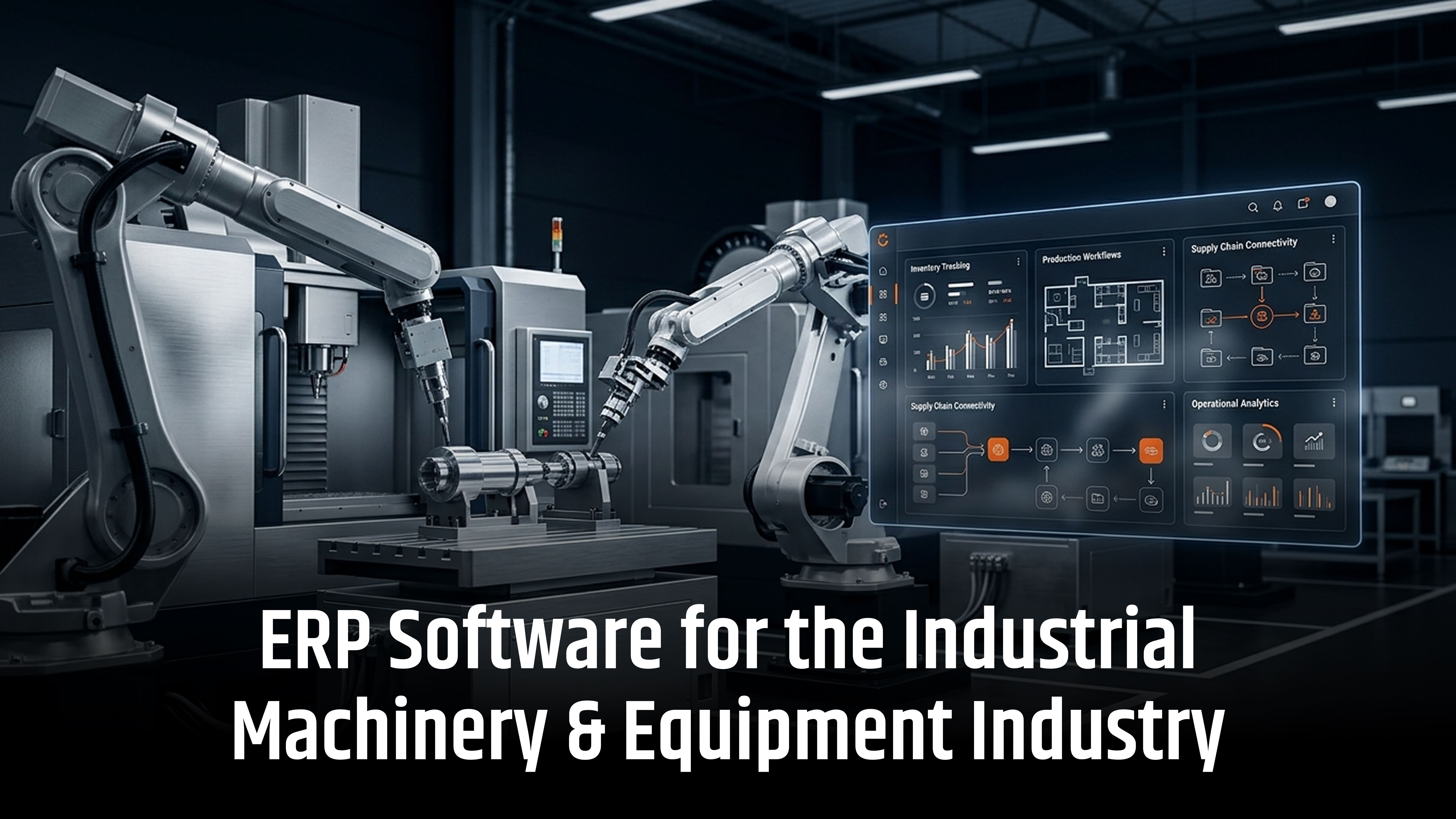
Managing an industrial machinery business involves many challenges. Material shortages delay production, poor inventory control increases costs, and manual planning makes delivery dates difficult to predict.
AI-powered ERP software for the industrial machinery and equipment industry helps manufacturers overcome these challenges by connecting production, inventory, purchasing, engineering, and finance in one system. It enables teams to track materials, control manufacturing costs, and improve production planning.
The right manufacturing ERP software also simplifies bill of materials (BOM) management, supplier coordination, quality checks, and changing customer orders. With cloud ERP, AI-assisted planning, and shop-floor integration, manufacturers can improve efficiency, reduce delays, and deliver quality equipment on time.
Why Do Machinery Manufacturers Need ERP Software?
Industrial machinery manufacturers handle complex products, custom orders, multiple suppliers, and long production cycles. Disconnected systems and manual processes can cause delays, stock errors, and higher costs. They can also lead to missed delivery deadlines.
Here are six common manufacturing challenges that ERP software helps solve.
1. Inefficient Production Planning
Without real-time information about material availability, machine capacity, and production schedules, manufacturers may face bottlenecks and unexpected downtime.
How ERP helps: Manufacturing ERP connects production planning, inventory, and procurement software to identify material shortages and improve production scheduling.
2. Inaccurate Inventory Management
Tracking raw materials, spare parts, electrical components, and finished goods manually can result in stock discrepancies, excess inventory, and material shortages.
How ERP helps: Inventory management software tracks stock levels, material movements, and production requirements to improve inventory accuracy.
3. High Manufacturing Costs
Material waste, labour expenses, machining, subcontracting, and overheads can reduce profit margins when costs are not tracked accurately.
How ERP helps: ERP-based job costing monitors material consumption, labour, and production expenses to improve cost control and profitability analysis.
4. Supplier Delays and Procurement Issues
Late deliveries of motors, bearings, castings, and other critical components can disrupt production schedules.
How ERP helps: Procurement management tracks purchase orders, supplier lead times, and expected delivery dates, helping teams identify potential delays earlier.
5. Engineering Changes and BOM Errors
Outdated drawings, incorrect components, and unapproved design changes can cause rework, material waste, and quality issues.
How ERP helps: Bill of Materials (BOM) management and engineering change control help teams use approved component lists and product revisions. Integration with Product Lifecycle Management (PLM) software can improve engineering data control.
6. Limited Production Visibility
When production, inventory, purchasing, and finance use separate systems, managers struggle to track order progress, manufacturing costs, and delivery risks.
How ERP helps: Centralised dashboards provide visibility into production status, stock availability, supplier performance, and manufacturing costs, supporting faster, data-driven decisions.
How ERP Software Solves These Manufacturing Problems
Manufacturing ERP software connects production planning, inventory management, procurement, quality control, and cost tracking in one system.
For example, when a machinery manufacturer receives a customised order, ERP checks the Bill of Materials (BOM), identifies material shortages, supports purchasing, and schedules production.
It also tracks material usage, production progress, quality inspections, and manufacturing costs. This helps teams reduce delays, improve coordination, and deliver orders on time.
|
Manufacturing problem |
Relevant ERP functionality |
Expected operational benefit |
|
Material shortages |
MRP and inventory management |
Earlier identification of shortages |
|
Production delays |
Production planning and scheduling |
Better visibility into bottlenecks |
|
Excess stock |
Inventory analysis and replenishment planning |
More informed purchasing decisions |
|
Unclear job costs |
Manufacturing and project costing |
Better cost tracking |
|
Supplier delays |
Procurement and supplier management |
Improved delivery monitoring |
|
Engineering errors |
Revision control and PLM integration |
Better control of product changes |
|
Quality issues |
Quality management and traceability |
Easier access to inspection records |
|
Service difficulties |
Warranty and service management |
Better equipment and service history |
These benefits depend on accurate data, appropriate configuration, and consistent use of the ERP system.
Essential ERP Features for Industrial Machinery and Equipment Manufacturers
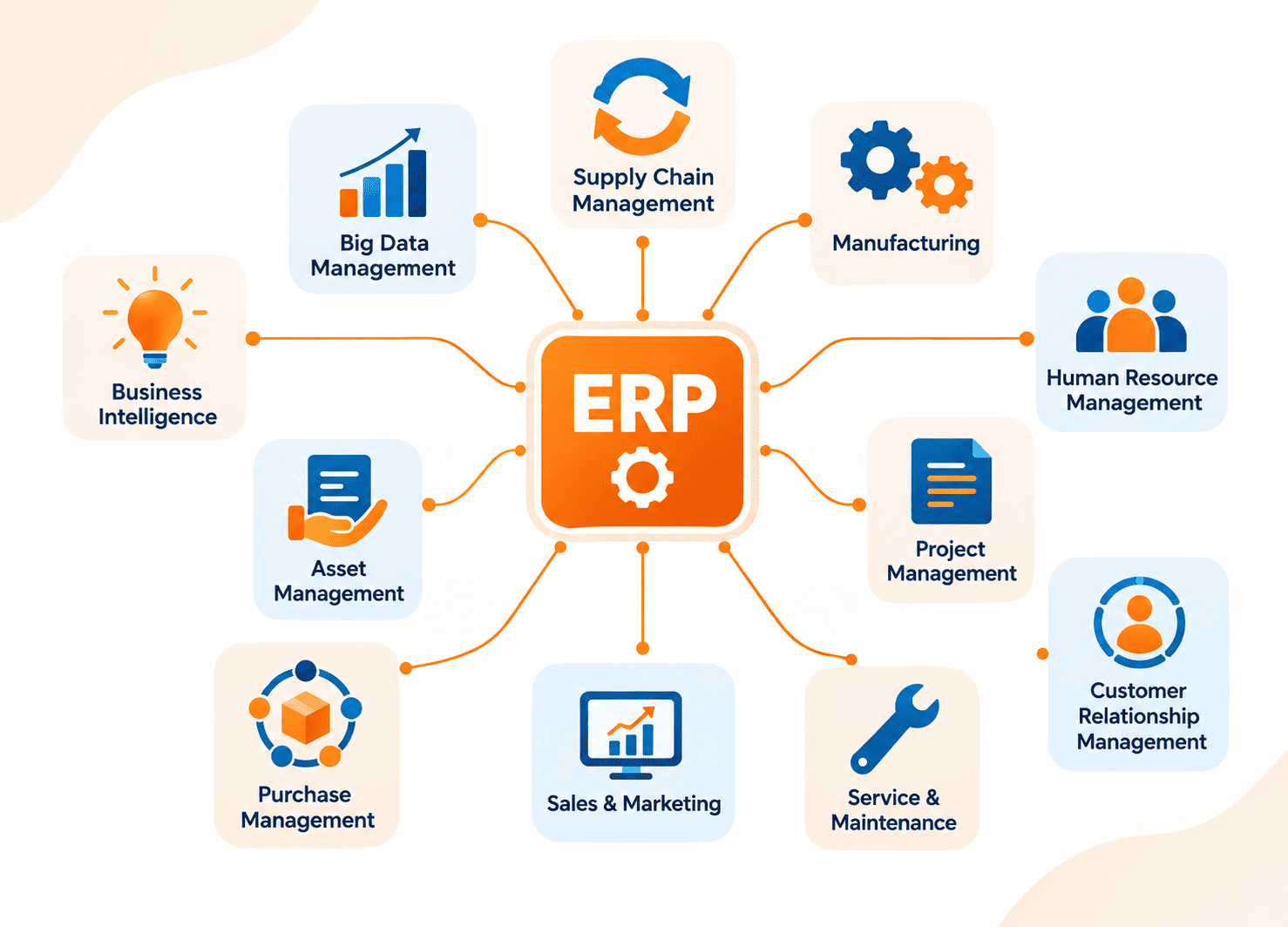
ERP software connects production, inventory, purchasing, finance, and customer service in one system. It helps machinery manufacturers reduce delays, control costs, manage materials, and deliver orders on time.
1. Bill of Materials (BOM) Management
BOM management lists all parts and materials needed to build a machine. It helps teams plan materials and avoid assembly errors.
Features:
- Multi-level BOMs for complex machinery.
- Component quantities and material alternatives.
- Engineering changes and revision tracking.
- BOM costing linked to production orders.
2. Material Requirements Planning (MRP)
MRP shows what materials are needed and when to order them. It helps prevent shortages and production delays.
Features:
- Material planning based on BOMs and work orders.
- Stock availability and shortage alerts.
- Supplier lead-time tracking.
- Purchase and production recommendations.
3. Production Planning and Scheduling
Production planning helps teams manage work orders, machines, and labour. It improves workflow and helps reduce production delays.
Features:
- Work order creation and tracking.
- Machine capacity and labour scheduling.
- Routing for machining, fabrication, and assembly.
- Production timelines and delay alerts.
4. Inventory and Warehouse Management
Inventory management tracks raw materials, components, finished machines, and spare parts. It helps reduce excess stock and prevent material shortages.
Features:
- Real-time stock levels across warehouses.
- Stock transfers and material reservations.
- Barcode scanning and cycle counting.
- Batch, lot, and serial number tracking.
5. Procurement and Supplier Management
Procurement software helps manufacturers buy materials on time and control purchasing costs. It also tracks supplier performance and deliveries.
Features:
- Purchase requests, quotations, and orders.
- Supplier delivery and lead-time tracking.
- Purchase approvals and goods receipt records.
- Subcontracting and job-work management.
6. Manufacturing Job Costing
Job costing tracks the cost of each machine, order, or project. It helps manufacturers compare planned costs with actual expenses.
Features:
- Raw material and component costs.
- Labour hours and machine costs.
- Subcontracting and overhead expenses.
- Job profitability and cost variance reports.
7. Quality Management and Traceability
Quality management helps maintain product standards at every production stage. Traceability helps teams find defects and identify affected parts.
Features:
- Incoming material inspections.
- In-process and final product checks.
- Defect reports and corrective actions.
- Batch, serial number, and inspection tracking.
8. Sales Order and Quotation Management
Sales order management connects customer enquiries with production and inventory. It helps teams provide accurate quotes and delivery dates.
Features:
- Customer quotations and sales order tracking.
- Custom machine configuration and pricing.
- Integration with Configure, Price, Quote (CPQ) software.
- Order status, delivery dates, and invoicing.
9. Finance and Cost Accounting
ERP finance tools connect accounting with purchasing, inventory, and production. They help manufacturers track expenses, cash flow, and profit.
Features:
- General ledger, accounts payable, and receivables.
- Inventory valuation and work-in-progress accounting.
- Manufacturing cost centres and financial reports.
- Support for applicable GST and e-invoicing requirements in India.
10. After-Sales Service and Spare Parts Management
After-sales service tools help manage repairs, warranties, and maintenance. They also help teams find the right spare parts quickly.
Features:
- Equipment serial numbers and warranty tracking.
- Spare parts stock and availability.
- Service contracts, repair orders, and maintenance records.
- Field technician scheduling and service reports.
Which Manufacturing Model Does Your Business Follow?
Choose ERP software that matches your production process and order requirements.
- Engineer-to-Order (ETO): Builds custom machinery. Requires engineering control, project planning, and job costing.
- Make-to-Order (MTO): Starts production after an order. Requires material planning and production scheduling.
- Configure-to-Order (CTO): Offers configurable products. Requires product configuration, CPQ, and pricing tools.
- Assemble-to-Order (ATO): Assembles stocked components on demand. Requires inventory and assembly planning.
- Make-to-Stock (MTS): Produces equipment based on forecasts. Requires demand planning and stock control.
Many manufacturers use multiple models. Choose an AI-powered ERP system that supports your production needs.
Benefits of ERP Software for the Industrial Machinery Industry
AI-powered ERP software helps industrial machinery manufacturers connect production, inventory, purchasing, finance, and service operations. It improves visibility, streamlines workflows, and supports better business decisions.
1. Improve Production Planning
Track production orders, machine capacity, and material availability. Identify bottlenecks and reduce manufacturing delays.
2. Increase Inventory Accuracy
Monitor raw materials, components, work in progress, and spare parts. Reduce stock errors and avoid unnecessary purchases.
3. Control Manufacturing Costs
Track material, labour, machine, and subcontracting costs. Compare estimated and actual costs for each job.
4. Improve On-Time Delivery
Connect production schedules with supplier lead times and material requirements. Identify delivery risks earlier.
5. Reduce Manual Work
Automate routine tasks, approvals, and reports. Reduce duplicate data entry across departments.
6. Strengthen Quality Control
Track inspections, defects, components, and serial numbers. Improve product traceability and simplify quality investigations.
7. Enhance After-Sales Service
Access equipment history, warranty details, and spare parts information. Help service teams manage repairs and customer requests faster.
Overall, manufacturing ERP software helps machinery manufacturers improve operational control, manage costs, and coordinate the entire business. Results depend on accurate data, effective implementation, and employee adoption.
How to Choose the Right Manufacturing ERP Software
Choose manufacturing AI-powered ERP software that meets your production needs, controls costs, and supports business growth. Evaluate these key factors before making a decision.
1. Manufacturing Requirements
Identify issues with production planning, inventory, material shortages, and job costing. Choose ERP features that solve these problems.
2. Essential ERP Features
Look for BOM management, MRP, production scheduling, inventory control, procurement, and financial management.
3. Industry-Specific Capabilities
Check support for custom machinery, engineering changes, subcontracting, serial number tracking, and manufacturing job costing.
4. Software Integration
Ensure the ERP connects with CAD, PLM, MES, CRM, warehouse, and accounting systems where needed.
5. Cloud vs. On-Premises ERP
Compare security, accessibility, maintenance, customisation, and infrastructure costs. Select the deployment model that suits your business.
6. Vendor Experience and Support
Review manufacturing expertise, implementation services, employee training, technical support, and customer references.
7. Total Cost of Ownership
Consider licences, implementation, data migration, integrations, training, and ongoing support.
Choose an ERP system that fits your manufacturing processes today and supports future business growth.
ERP Implementation: What Should Manufacturers Plan For?
Even suitable software can fail to deliver value if implementation is poorly managed.
- Map Processes: Identify workflow gaps and production delays.
- Clean Data: Verify BOMs, item codes, supplier records, and inventory.
- Test Workflows: Check production, purchasing, and quality processes before launch.
- Train Employees: Teach teams how to use the ERP system.
- Track Results: Monitor inventory accuracy, production costs, and delivery times.
ERP Trends for Industrial Machinery Manufacturers in 2026
Industrial machinery manufacturers are adopting AI-powered ERP, cloud technology, IoT, and connected systems to improve production efficiency, reduce downtime, and make smarter business decisions.
1. AI-Powered ERP
AI helps manufacturers analyse data, forecast demand, and identify production issues. It supports faster, data-driven decisions.
2. Industrial IoT and Predictive Maintenance
Connected sensors monitor machine performance and equipment health. Integration with maintenance systems helps reduce unexpected downtime.
3. ERP, MES, and PLM Integration
Connecting ERP, Manufacturing Execution Systems (MES), and Product Lifecycle Management (PLM) links production, inventory, and engineering data.
4. Cloud Manufacturing ERP
Cloud ERP provides access to business data across factories and offices. It supports connected operations, scalability, and remote access.
ERP Software Evaluation Checklist
Use this checklist when comparing manufacturing ERP vendors.
- Supports your production model: ETO, MTO, CTO, ATO, or MTS.
- Manages multi-level BOMs and engineering revisions.
- Supports MRP and production planning.
- Tracks inventory across warehouses and locations.
- Manages purchasing and supplier lead times.
- Supports subcontracting and job-work processes.
- Tracks estimated and actual manufacturing costs.
- Provides quality records and product traceability.
- Integrates with essential engineering and shop-floor applications.
- Meets applicable accounting and statutory requirements.
- Provides suitable access controls, backup, and recovery.
- Fits the available budget and implementation capacity.
- Includes training, support, and a clear implementation plan.
Use the checklist to identify gaps and compare vendors against the same requirements.
Improve Your Factory Operations with WOWinfotech
Managing production, inventory, purchasing, and manufacturing costs can be challenging. Manufacturing AI-powered ERP software brings these processes together in one system.
WOWinfotech helps industrial machinery manufacturers simplify daily operations, track production orders, manage materials, and control costs.
Want to see how ERP fits your factory? Book a manufacturing ERP demo with WOWinfotech today and explore a solution that meets your business needs.
Conclusion
ERP software helps industrial machinery manufacturers manage complex orders, track materials, and control production costs. It connects engineering, purchasing, inventory, and production in one system.
The right manufacturing ERP solution can reduce delays, improve resource planning, and support business growth.
Frequently Asked Questions
-

Team WOWinfotech
WOWinfotechOct 19,2026