How Dealer Management Software Helps FMCG Track Dealer Inventory
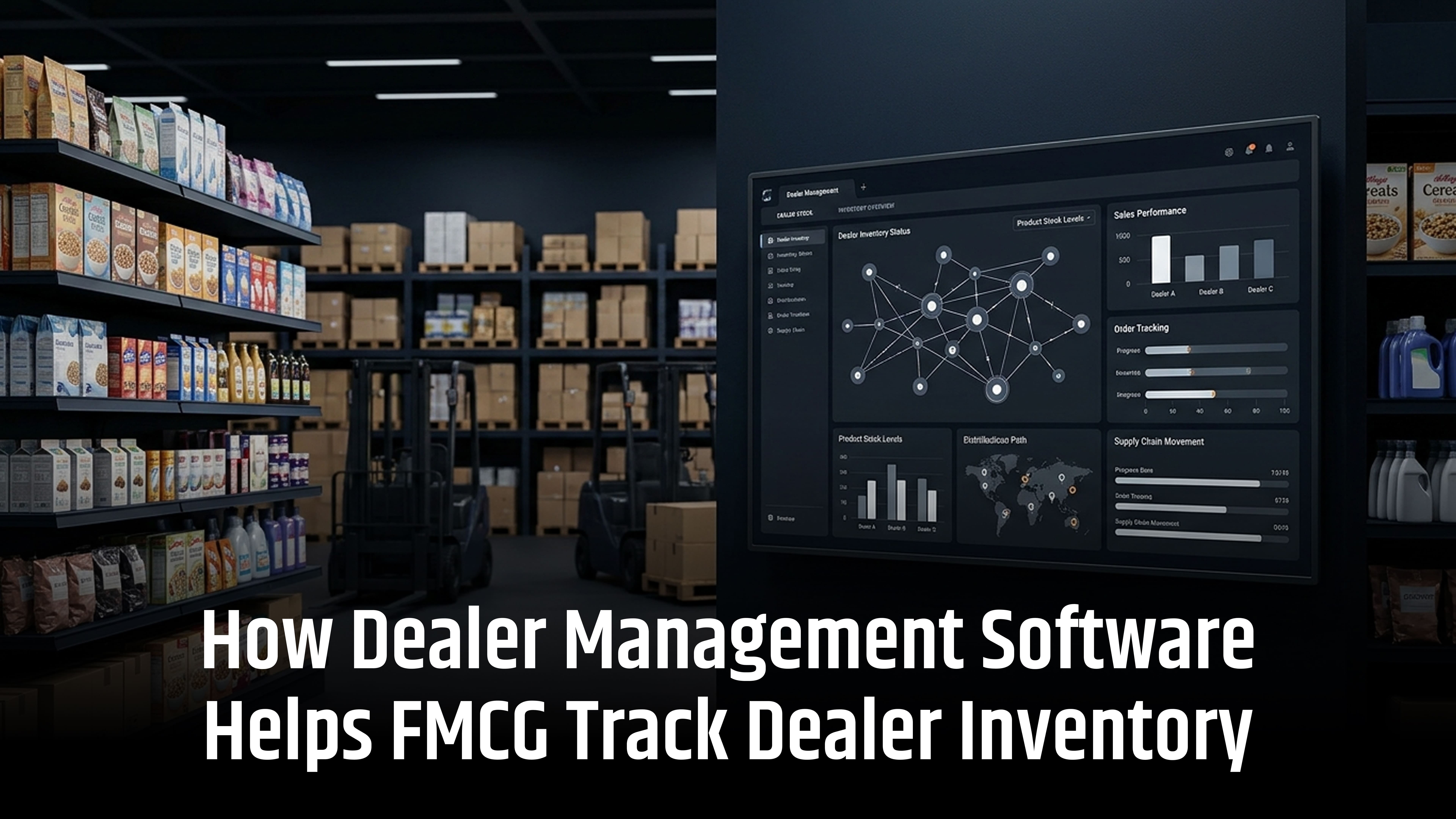
Managing dealer inventory across multiple locations is challenging for FMCG businesses. Manual tracking often causes stock errors, shortages, overstocking and order delays.
Dealer Management Software (DMS) helps businesses track inventory, monitor sales and manage orders in real time. It provides clear stock visibility and supports demand forecasting.
With automated reporting and stock monitoring, FMCG companies can reduce errors and improve inventory control. DMS also helps streamline distribution and strengthen dealer coordination. This leads to fewer stockouts, faster decisions and better operational efficiency.
What is Dealer Management Software?
A Dealer Management System (DMS) is a centralized platform for managing daily business operations. In FMCG, it helps manufacturers, distributors, and dealers track inventory, stock movement, and sales orders.
It also manages product distribution, returns, and invoicing. These features improve stock visibility, dealer coordination, and supply chain efficiency.
How Does a Dealer Management System Work?
A Dealer Management System (DMS) manages dealership operations in one place. It connects inventory, sales, servicing, finance, and accounting.
- Inventory and Stock Management: Tracks product availability across locations. Records stock levels, serial numbers, and transfers.
- Sales Management: Tracks customer leads and quotes. Manages test drives, orders, and sales contracts.
- Service and Repair Management: Schedules service appointments. Assigns technicians and tracks repair orders.
- Spare Parts Management: Monitors spare parts stock. Automates reordering and tracks supplier orders. Supports POS sales.
- Finance and Insurance: Manages credit applications and lender coordination. Tracks financing records and supports compliance.
- Accounting and Reporting: Records invoices, payments, and expenses. Integrates with accounting tools like QuickBooks. Generates KPI reports for better decisions.
A DMS reduces manual work and improves data accuracy. It helps dealerships track operations and manage daily tasks efficiently.
How inventory moves through the FMCG distribution network
Manufacturer → Distributor or stockist → Dealer or retailer → Consumer
At each stage, stock can be received, sold, transferred, returned, damaged, or written off. If these transactions are not recorded consistently, the inventory figures in different systems may not match.
Dealer Management Software brings relevant transactions into a structured workflow so authorised users can review stock balances, sales activity, and replenishment requirements.
Why FMCG Companies Struggle to Track Dealer Inventory
FMCG companies often struggle to track dealer inventory due to delayed reports, manual spreadsheets, and poor stock visibility. These gaps make it difficult to identify stock shortages, excess inventory, and replenishment needs.
Dealer Management Software helps centralise inventory data, track secondary sales, and improve stock visibility across the distribution network.
Challenges in FMCG Dealer Inventory Tracking:
1. Delayed Stock Updates
Delayed distributor reports make it difficult to track actual stock levels. This affects demand forecasting and replenishment planning.
2. Stockouts of Fast-Moving Products
High-demand products may run out before new stock arrives. Accurate inventory tracking helps prevent stockouts and lost sales.
3. Excess and Slow-Moving Inventory
Poor sales visibility can lead to overstocking. Excess inventory increases storage costs and the risk of product expiry.
4. Product Expiry and Returns
Untracked batches, damaged goods, and product returns create inventory discrepancies. Batch tracking and expiry monitoring help reduce waste.
5. Limited Primary and Secondary Sales Visibility
Primary sales track manufacturer-to-distributor sales. Secondary sales track distributor-to-retailer sales. Tracking both helps businesses understand product demand and stock movement.
6. Manual Reporting and Stock Discrepancies
Spreadsheets and manual reports increase errors and delay updates. Inventory management software helps maintain accurate, consistent stock records.
How Can FMCG Companies Improve Dealer Inventory Tracking?
Dealer Management Software helps FMCG companies:
- Track stock by distributor, warehouse, and SKU.
- Identify low-stock products and potential stockouts.
- Monitor slow-moving inventory and expiry dates.
- Compare primary and secondary sales.
- Improve replenishment planning.
- Reconcile system records with physical stock.
Improve your FMCG inventory visibility. Request a Dealer Management Software demo to simplify stock tracking, improve sales visibility, and optimise distribution planning.
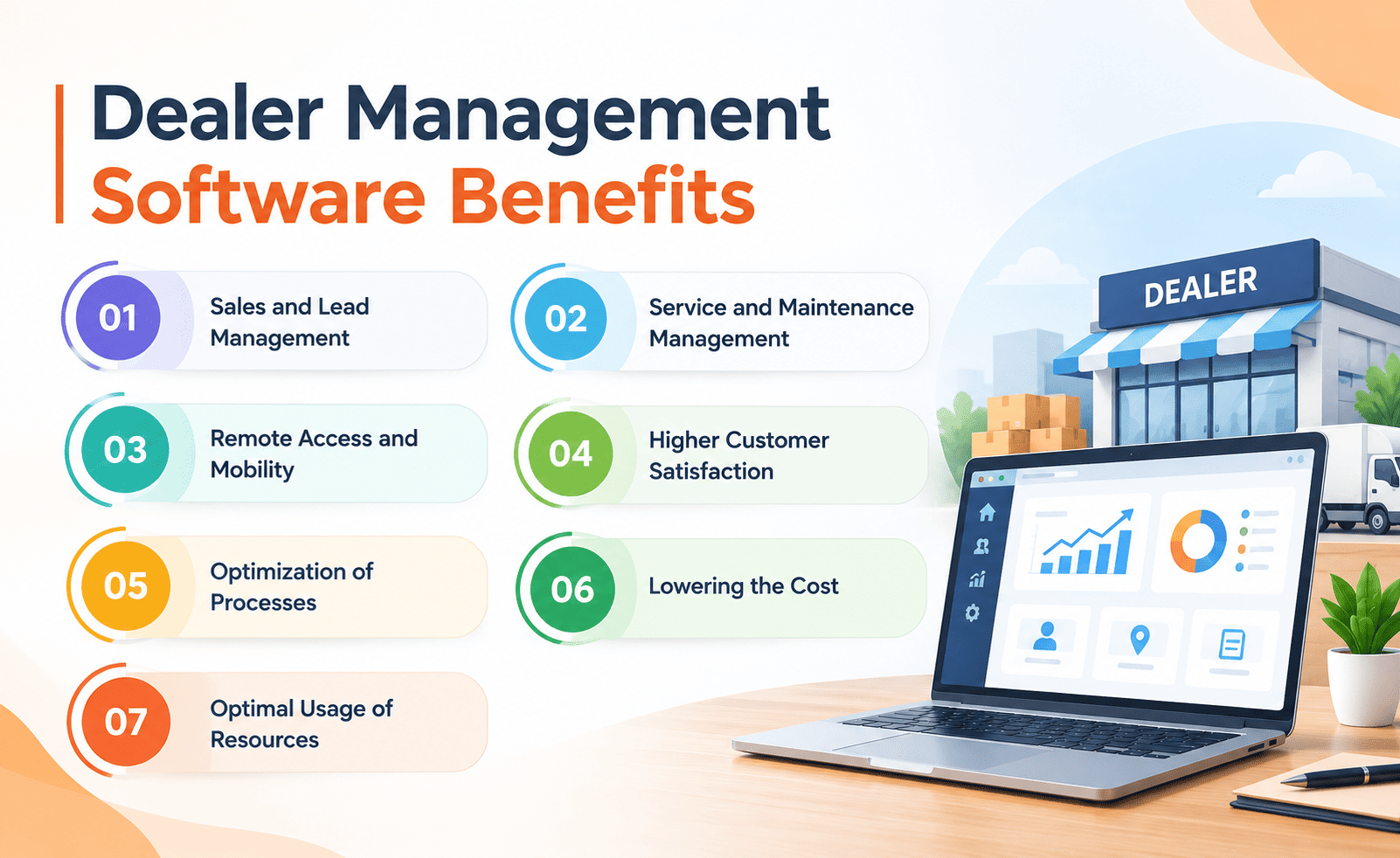
How Dealer Management Software Helps FMCG Track Dealer Inventory
Dealer Management Software (DMS) connects inventory records, sales transactions, and dealer orders. It helps FMCG companies track stock, prevent shortages, and improve inventory control.
1. Centralised Stock Visibility
A central dashboard shows stock by distributor, warehouse, SKU, and territory. Teams can identify excess inventory and replenishment needs quickly.
2. SKU-Level Inventory Tracking
SKU tracking monitors each product variant, size, and pack type separately. Teams can track opening stock, receipts, sales, returns, transfers, and closing stock.
This improves stock accuracy and product-level visibility.
3. Low-Stock Alerts and Replenishment
Low-stock alerts help teams identify products that need replenishment. Businesses can set reorder levels based on demand, lead time, and safety stock.
This helps prevent stockouts and maintain optimal inventory levels.
4. Batch and Expiry Management
Batch tracking helps FMCG companies monitor expiry dates, damaged goods, and product returns. First-Expiry, First-Out (FEFO) prioritises products with earlier expiry dates.
This reduces product waste and expiry-related losses.
5. Secondary Sales Tracking
Secondary sales tracking monitors distributor-to-retailer sales. It helps businesses identify fast-moving products, slow-selling SKUs, and excess dealer stock.
These insights support better demand forecasting and stock allocation.
6. Inventory Reconciliation
Inventory reconciliation compares system stock with physical inventory. Teams can identify missing transactions, unrecorded returns, and stock discrepancies.
Accurate stock records improve inventory control and reporting.
7. Order and Distribution Planning
DMS connects dealer orders with available inventory. Sales teams can check stock before confirming orders and plan product distribution more efficiently.
Integration with ERP and accounting systems can also reduce duplicate data entry.
8. Inventory Reports and Analytics
Inventory reports help managers monitor stock levels and product movement across dealers and territories.
Key reports include:
- Stock by distributor and SKU
- Low-stock alerts
- Slow-moving inventory
- Batch expiry reports
- Primary and secondary sales
- Returns and damaged stock
- Inventory discrepancies
These insights help FMCG companies improve replenishment planning, reduce excess stock, and strengthen distribution efficiency.
Essential Features to Look for in FMCG Dealer Management Software
Not every business needs every available feature. Start with the capabilities that address your current inventory problems.
|
Priority feature |
What to check during evaluation |
|
SKU-level inventory |
Can you view stock by product, pack size, distributor, and warehouse? |
|
Stock movement history |
Can you trace receipts, sales, returns, and adjustments? |
|
Batch and expiry tracking |
Can the system flag batches approaching expiry? |
|
Secondary sales reporting |
Can you see sales from distributors to retailers? |
|
Reorder alerts |
Can thresholds reflect demand and replenishment lead time? |
|
Order management |
Can users check stock while processing orders? |
|
Reconciliation |
Can you compare system records with physical stock and identify variances? |
|
Mobile access |
Can authorised field and distribution users capture transactions conveniently? |
|
Offline capability |
Can users record transactions when connectivity is limited, and how does syncing work? |
|
Integrations |
Can the system connect with your ERP, accounting software, or sales application? |
|
Access controls |
Can users access only the information and actions appropriate to their roles? |
|
Reports and exports |
Can managers export or analyse the data they need? |
Four questions to ask before requesting a demo
- Can I see stock by distributor and SKU, including recent stock movements?
- Can I track secondary sales and compare them with primary sales?
- How are returns, expired stock, and inventory adjustments handled?
- What happens when users enter transactions offline or when data from an integration is delayed?
Ask the vendor to demonstrate these workflows using realistic examples. A feature list is less useful than seeing how the system handles the transactions your business performs every day.
Considering a software change? Prepare a list of your current inventory challenges and ask the vendor to demonstrate how each one would be handled. This makes the evaluation more specific and helps you compare systems fairly.
A Practical Example of Dealer Inventory Tracking
Consider an FMCG distributor handling packaged food and household products. The team previously tracked stock using spreadsheets and delayed sales reports.
With Dealer Management Software, the team can track stock receipts, retailer sales, returns, and inventory adjustments in one system.
|
Product |
Available Stock |
Daily Sales |
Days of Stock |
|
Product A |
120 units |
40 units |
3 days |
|
Product B |
600 units |
100 units |
6 days |
|
Product C |
1,500 units |
100 units |
15 days |
Formula: Days of Stock = Available Stock ÷ Average Daily Sales
Product A has only three days of stock. If replenishment takes four days, the distributor may need to reorder quickly.
Product C has 15 days of stock. If demand slows, the team can review future orders to avoid overstocking.
Business Benefits
- Better stock visibility: Track inventory across products and warehouses.
- Faster replenishment: Identify low-stock products before shortages occur.
- Reduced overstocking: Monitor slow-moving inventory and excess stock.
- Accurate inventory records: Identify discrepancies and unrecorded transactions.
- Improved sales planning: Use secondary sales data to understand retailer demand.
These benefits depend on accurate stock records, timely updates, and effective use of the inventory management system.
How to Choose Dealer Management Software for FMCG
Choose Dealer Management Software based on your inventory needs and distribution network.
- Essential Features: Stock tracking, order management, expiry alerts, and secondary sales reporting.
- System Integration: Compatibility with ERP, accounting, and sales software.
- Ease of Use: Simple workflows and mobile access.
- Total Cost: Setup, licences, training, and maintenance.
- Performance Metrics: Stock accuracy, fewer stockouts, and faster replenishment.
Choose a DMS that improves inventory visibility, streamlines dealer management, and optimises FMCG distribution.
Inventory KPIs FMCG Companies Should Track
Inventory KPIs help businesses determine whether their processes are improving. Use consistent definitions and compare results over time.
|
KPI |
Calculation |
What it tells you |
|
Days of stock |
Available stock ÷ average daily sales |
How long current stock may last at the current sales rate |
|
Inventory turnover |
Cost of goods sold ÷ average inventory value |
How frequently inventory is sold and replaced over a period |
|
Stockout rate |
Stockout events ÷ total relevant product-location observations × 100 |
How often products are unavailable |
|
Inventory accuracy |
Correctly matched stock records ÷ records checked × 100 |
How closely system records match physical stock |
|
Expiry or write-off rate |
Expired or written-off stock value ÷ relevant inventory or sales value × 100 |
The scale of losses from expired or written-off stock, using a consistent denominator |
|
Order fulfilment rate |
Order lines fulfilled in full ÷ total order lines × 100 |
How reliably requested products are supplied |
For inventory turnover, use the same accounting period and valuation method when comparing results. For stockout and expiry metrics, define the measurement method clearly so teams are not comparing different calculations.
Improve FMCG Dealer Inventory Tracking with WOWinfotech
Struggling with stock discrepancies, delayed reports, or excess inventory? WOWinfotech’s Dealer Management Software helps FMCG businesses track dealer stock, monitor secondary sales, and manage replenishment.
Want better control over dealer inventory? Contact WOWinfotech today to book a demo and see how our DMS can simplify stock tracking and distribution management.
Conclusion
Effective dealer inventory tracking helps FMCG companies reduce stock discrepancies, prevent stockouts, and improve replenishment planning. Dealer Management Software provides better stock visibility, secondary sales tracking, and inventory control across the distribution network.
Choose WOWinfotech’s Dealer Management Software to simplify inventory management and improve FMCG distribution efficiency. Contact WOWinfotech today to book a demo.
Frequently Asked Questions
-

Team WOWinfotech
WOWinfotechOct 21,2026