Voice Search: How to optimize your website in 2026
.jpg)
To optimize your website for voice search in 2026, focus on conversational keywords, fast-loading mobile pages, structured data (schema), and clear answers to user questions. Also improve local SEO and create content that matches natural spoken queries.
Voice search is changing the way people search online. Instead of typing short keywords, users now ask full questions using voice assistants like Google Assistant, Siri, and Amazon Alexa. This shift means websites need to adapt their SEO strategies to match how people naturally speak.
In 2026, ranking for voice search is not just about keywords it’s about understanding user intent, using simple language, and providing clear, direct answers. If your content is easy to understand and well-structured, you have a better chance of appearing in featured snippets and being selected as a voice result. This guide will show you exactly how to optimize your website for voice search and stay ahead in the evolving SEO landscape.
What is Voice Search SEO?
Voice Search SEO means improving your website so it can appear as a spoken answer when people use voice assistants like Google Assistant, Siri, and Amazon Alexa.
Instead of typing, users speak questions like:
- “What is voice search SEO?”
- “How do I optimize my website for voice search?”
Your goal is to give clear, short, and helpful answers.
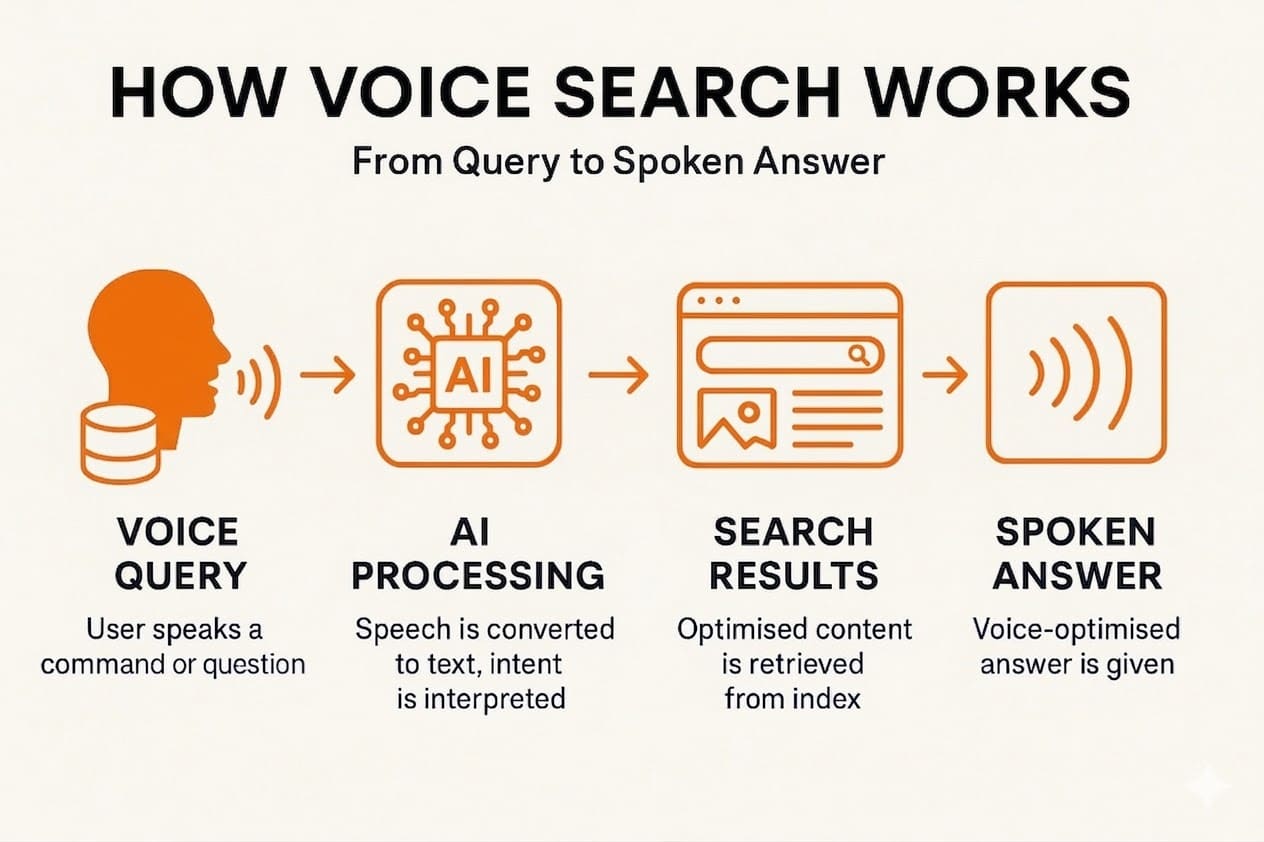
How Voice Search Works
- User speaks a question
- AI converts speech to text
- It understands meaning using Natural Language Processing
- It finds the best answer
- It reads the answer aloud
That’s why your content must be easy to understand and direct.
10 Easy Ways to Optimize for Voice Search in 2026
1. Use Conversational Keywords
Voice searches sound like real conversations. People use complete sentences rather than short keywords when speaking to voice assistants like Google Assistant and Siri.
Example:
- Typed: “best SEO tools.”
- Voice: “What are the best SEO tools for beginners?”
What to do:
- Use question words: what, how, why, where
- Write like people speak
- Use long-tail keywords
2. Answer Questions Clearly
Answer questions clearly by giving direct, simple answers right below the heading. Keep your response short (around 40-60 words) so it’s easy for search engines and voice assistants to pick up.
Example:
Question: What is voice search SEO?
Answer: Voice search SEO is the process of optimizing your website so it can appear as a spoken answer in voice assistants.
Tips:
- Keep answers 40-60 words
- Use simple sentences
- Put answers right below headings
3. Optimize for Featured Snippets
Voice assistants often read answers from Google featured snippets.
How to win snippets:
- Add short definitions
- Use bullet points
- Use numbered lists
- Answer directly (no fluff)
4. Improve Website Speed
Fast websites rank better.
Do this:
- Use fast hosting
- Compress images
- Reduce unnecessary code
Aim for under 3 seconds load time
5. Make Your Website Mobile-Friendly
Most voice searches happen on phones. This means your website must be mobile-friendly, fast, and easy to navigate for a smooth user experience.
Checklist:
- Responsive design
- Easy navigation
- Fast loading
6. Use Structured Data (Schema Markup)
Schema helps search engines understand your content better. It makes it easier for them to pick and display your information in featured snippets and voice search results.
Important types:
- FAQ schema
- How-to schema
- Local business schema
This increases your chances of being selected as a voice answer.
7. Focus on Local SEO
Many voice searches are local. People often look for nearby services, so optimizing for local SEO helps your business appear in “near me” searches.
Example:
- “Best cafe near me”
- “SEO agency in Pune”
What to do:
- Optimize Google Business Profile
- Add your location
- Use local keywords
8. Create FAQ Sections
FAQ content matches voice queries perfectly. It uses natural question-and-answer formats, making it easier for voice assistants to find and read your content.
Example:
Q: How does voice search work?
A: Voice search uses AI to understand spoken queries and give direct answers from search results.
Add FAQs to every important page.
9. Write Simple and Clear Content
Avoid complex words. Use simple, clear language so both users and voice assistants can easily understand your content.
Write like this:
- Short sentences
- Easy words
- Clear meaning
Voice assistants prefer content that is easy to read aloud.
10. Build Trust (E-E-A-T)
E-E-A-T stands for Experience, Expertise, Authority, and Trust. It helps search engines decide if your content is reliable and worth showing in top results.
Improve it by:
- Writing helpful content
- Showing author details
- Getting backlinks
- Updating content regularly
Trusted websites are more likely to be chosen for voice answers.
Voice Search SEO Checklist
- Use conversational keywords
- Answer questions clearly
- Optimize for featured snippets
- Improve page speed
- Make site mobile-friendly
- Add schema markup
- Focus on local SEO
- Add FAQs
- Write simple content
- Build trust
Common Mistakes to Avoid
- Writing long, confusing paragraphs
- Ignoring mobile optimization
- Not answering questions directly
- No structured data
- Keyword stuffing
Conclusion
In conclusion, voice search optimization in 2026 is about using simple, conversational content, answering questions clearly, and ensuring your website is fast and mobile-friendly. By focusing on user intent and structured data, you can improve your chances of ranking in featured snippets and voice results.
Want expert help to grow your rankings? Get in touch with WOWinfotech and take your SEO strategy to the next level.
FAQs
-

Krishna Handge
WOWinfotechMar 20,2026